
Homes & residential
Pitched tile and slate roofs, home battery storage and an EV charger on the drive — designed and fitted by the same MCS-certified electricians, with the tidy, test-and-certify finish you would want in your own house.
Home solar & battery · County Durham & the North East
Solar panels, battery storage and home EV charging — designed and fitted by NICEIC electricians who have wired the North East for thirty years.
NICEIC · MCS-certified · RECC-registered · Free home survey · No pushy sales
See how it works




Fox ESSSigenergySolaXTeslaSMASolis
Trusted by
Councils, the NHS, transport and logistics operators and universities are among the organisations we have carried out work for.






What we do
Solar, storage, EV charging and the electrical trade underneath all three — for your home or your business, from one team that designs, installs and certifies its own work.
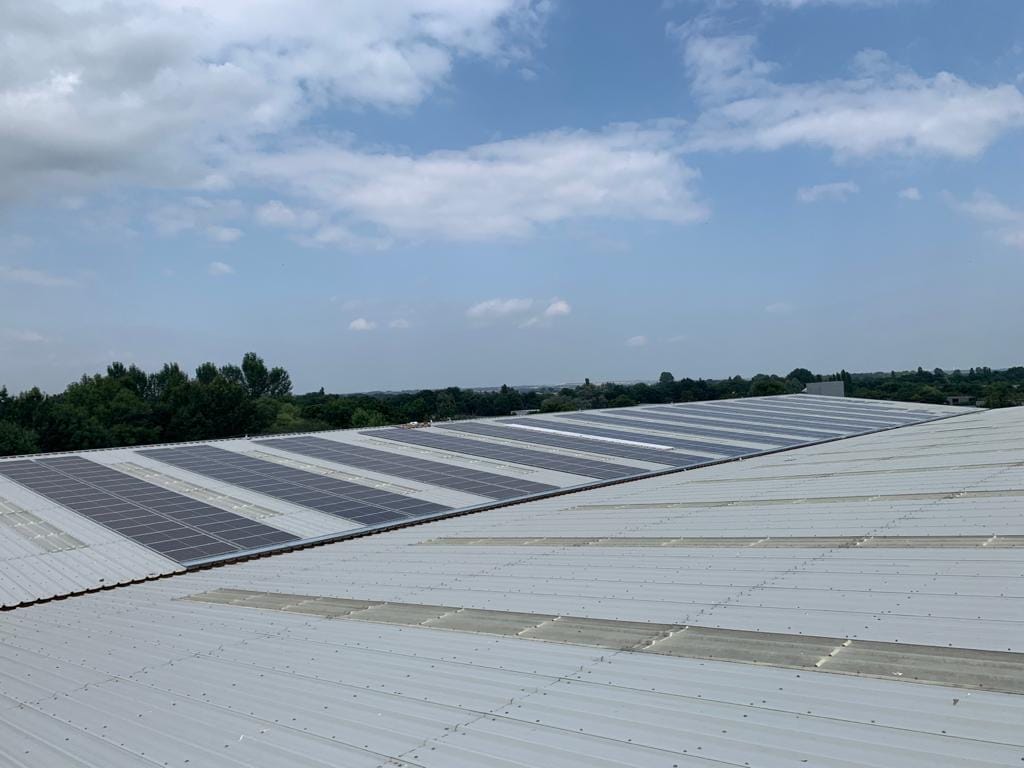
Roof-mounted solar for homes, farms, warehouses and factories — sheet roofs a speciality, designed and installed by electricians.
Store the solar you generate and cut peak-rate costs — Fox ESS for home and business.
ExploreHome chargers, workplace charge points and solar car ports, wired to last.
ExploreDesign, install, test and certify — for homes and businesses, thirty years on the tools.
ExploreSavings calculator
Two sliders, an honest answer. Then a proper survey turns the estimate into a promise.
Open the full calculatorSystem size
Saved per year
Quick estimate at 17p/kWh — the full calculator refines it with your actual usage. Survey-verified before any quote.
Who we work with
From a family home to a factory roof, solar rewards the right building. These are the ones we build on most — homes and businesses alike — where a North East contractor who knows the roof construction earns its keep.
Pitched tile and slate roofs, home battery storage and an EV charger on the drive — designed and fitted by the same MCS-certified electricians, with the tidy, test-and-certify finish you would want in your own house.
Grain stores, livestock housing and machinery barns are steel-framed sheds with big roofs and a daytime load — pumps, parlours, refrigeration — that solar covers well. We treat agricultural roofs as first-class commercial work, because for the farm’s economics they are.
Large, flat-ish sheet-metal roofs and a working day that lines up with generation. A clamp-mounted array goes on without roof penetrations, and for a unit running through the day most of the output never touches the grid — it quietly replaces bought electricity.
Manufacturing carries the region’s heaviest daytime demand, so on-site solar displaces the most expensive bought power first. Bigger roofs also bring the per-kWp price down — scale is where commercial solar pays hardest.
A county council, the NHS and a university are already on our client list. Public work brings procurement, planned access and out-of-hours constraints — routine for a contractor with 30 years of electrical experience.
Grade II listed and older buildings, where the planning conversation and the conservation officer matter as much as the panels — handled by the same in-house team that surveys, installs and certifies the rest.
Why G Smith
Most solar companies started in sales and hired their electricians afterwards. We came at it the other way round: three decades of commercial electrical work — power distribution, lighting, fire-alarm and testing — and then, fifteen years ago, solar arrived as a natural extension of the same trade. A solar installation is DC strings, protection, an inverter, a grid connection and certification on a roof. We already knew that work.
It is why the array we design is engineered rather than merely sold. If a distribution board needs upgrading before the panels — or a bank of EV chargers — can go in, we say so up front. And when the system is live, the certification behind it is signed off by people who certify electrical installations for a living. Based in County Durham, working across the North East.
Our work
A few of our own commercial installs across the North East — real projects, with the system sizes and payback periods our clients are seeing.
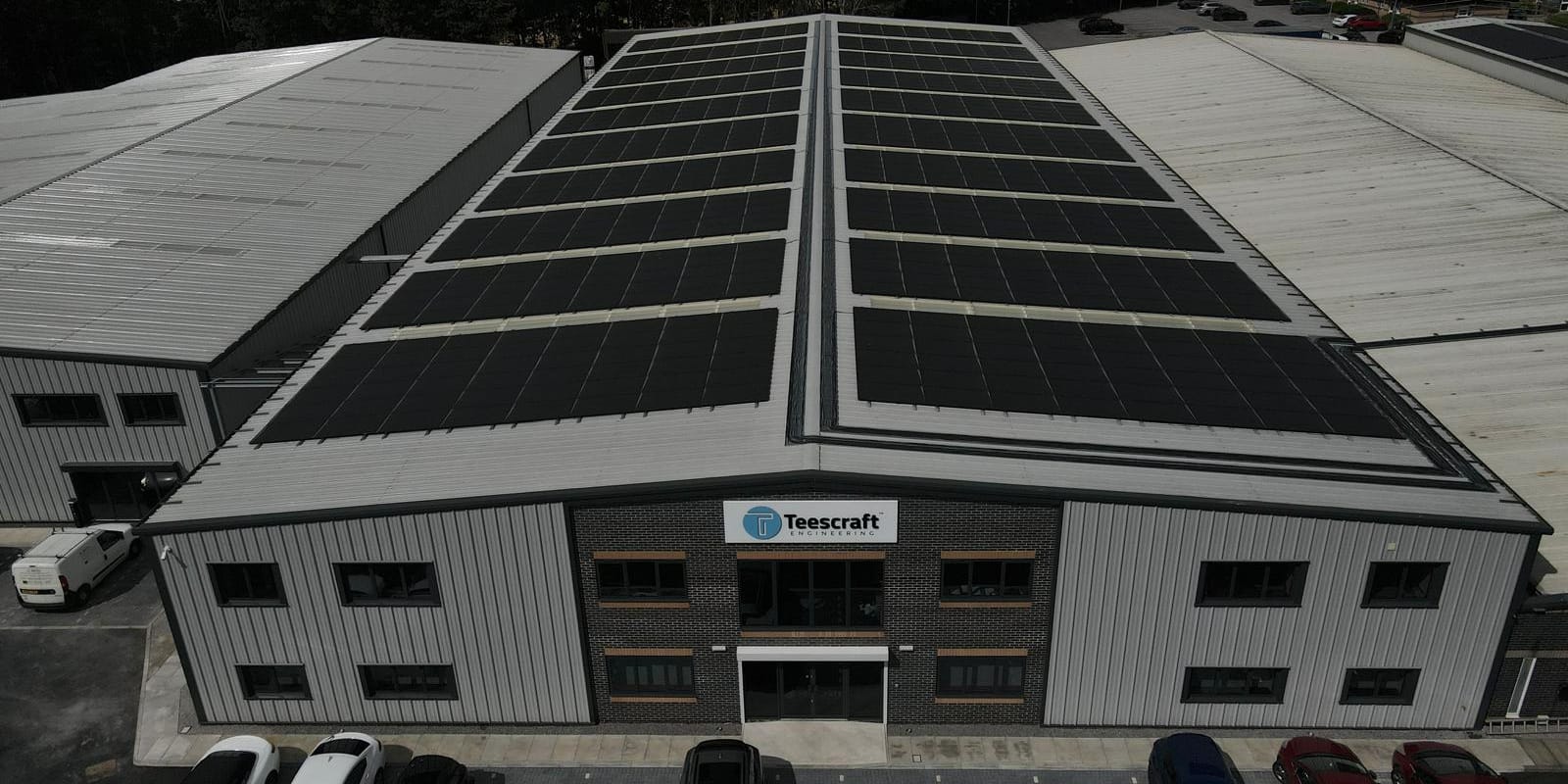
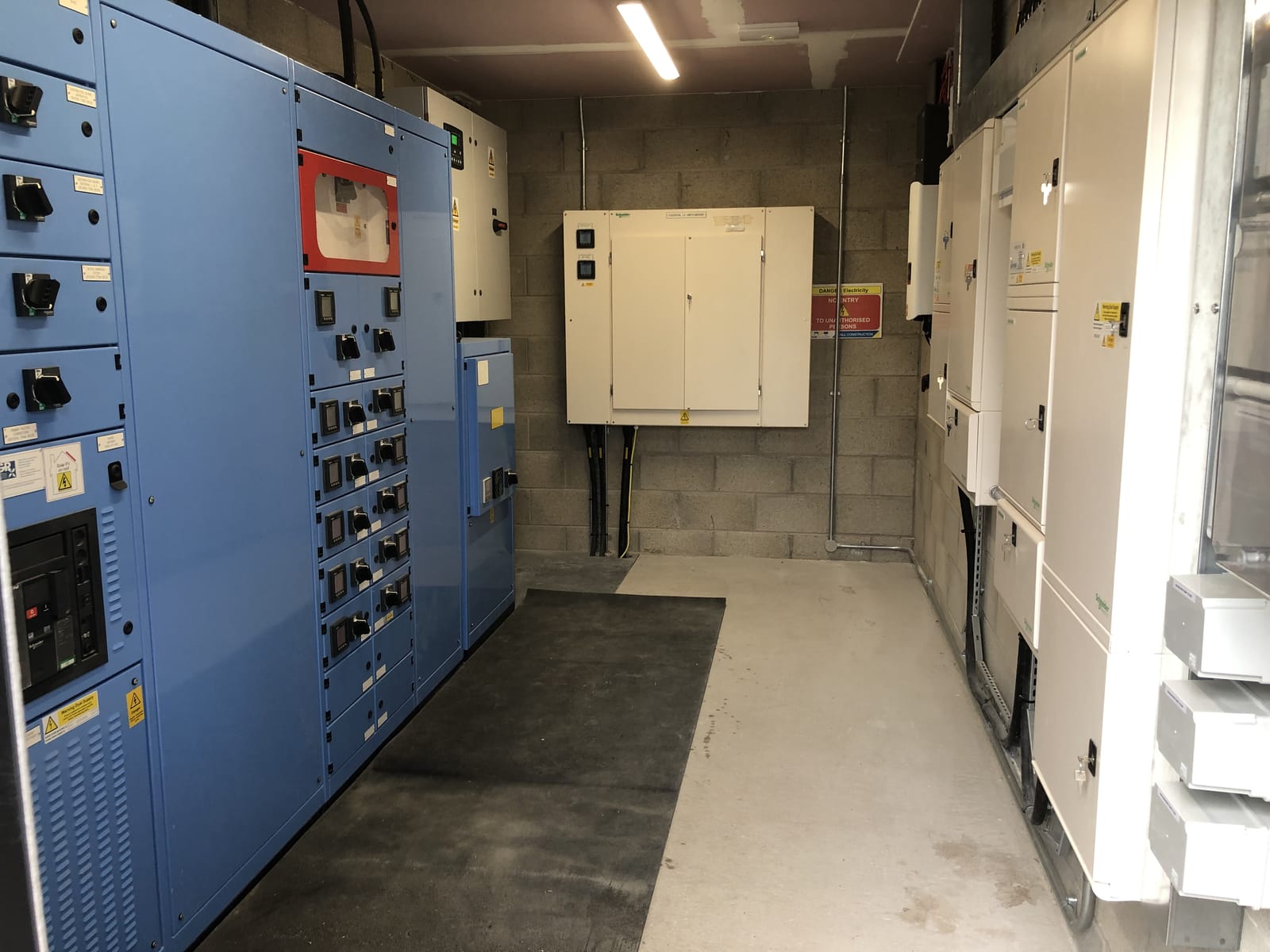
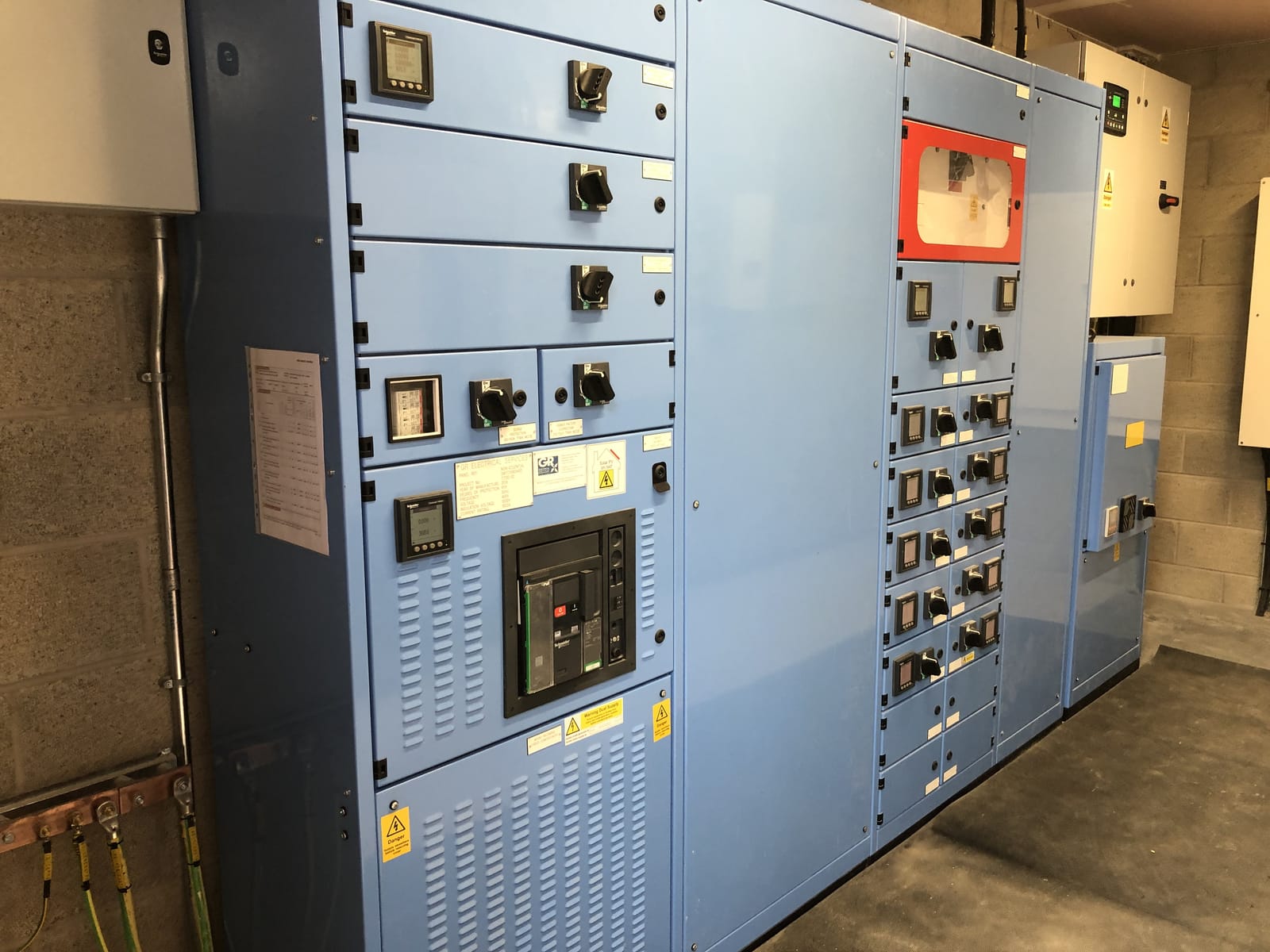
A complete site electrical fit-out — a 1600-amp substation, distribution, power, lighting, controls, fire, data and security — finished with a 475 kWp rooftop array.
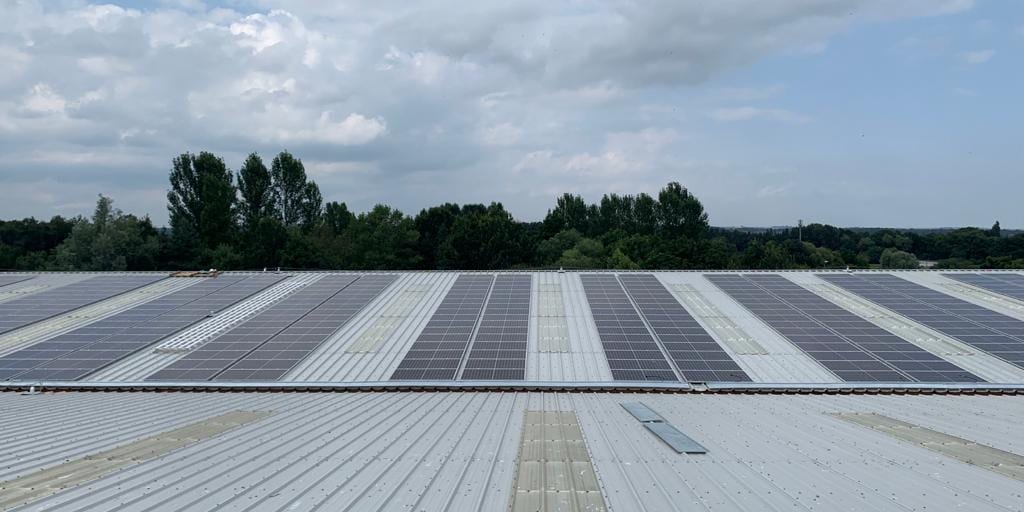
A 175 kWp array across the warehouse roof, alongside an ongoing contract servicing Stiller’s existing electrical infrastructure.
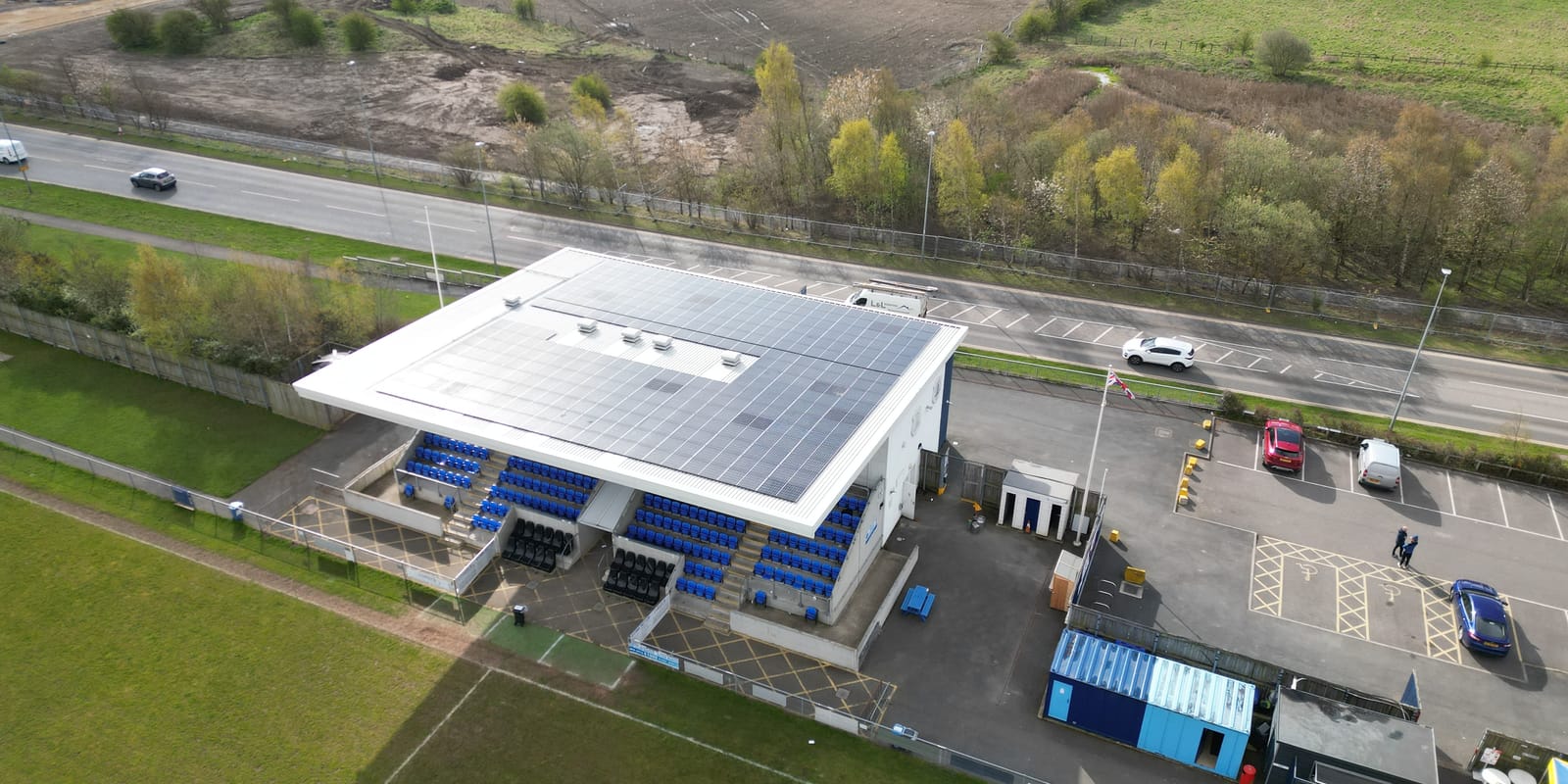
A 75 kWp array on the main grandstand roof, generating around 72,000 kWh a year for the club.
Drone footage
Our own drone footage of completed installs — hover or tap a clip to play.
Process
The other thing we do
Behind the solar work is an electrical contracting company with 30+ years on commercial and residential jobs — the same team designs, installs, inspects and maintains.
Straight answers
Five of the ones businesses ask before a survey — the rest, with sources, are on the FAQs page.
Yes — with an honest caveat about scale. A well-oriented commercial roof in the North East typically generates 800–950 kWh a year for each kWp installed, against a UK average of around 900; the south coast does better, northern Scotland worse. The bigger driver for a business is not latitude but timing: commercial buildings use power in the daytime, when the panels generate, so far more of the output offsets electricity you would otherwise buy at full price. Panels generate on overcast days too, at reduced output — the North East’s weather is priced into the yield figures, not hiding from them.
Usually not. Most rooftop solar on non-domestic buildings in England is permitted development, and the old 1 MW capacity cap on that right was removed in November 2023. Conditions still apply — panels must sit within set projection limits, and systems above 50 kW involve a prior-approval application to the council covering design and glare, which is a lighter process than full planning permission. Listed buildings and some conservation-area sites are the exception. We handle the planning legwork as part of the design stage.
No — not until at least 2035. Eligible plant and machinery used in onsite renewable generation and storage, including rooftop solar and batteries serving the building’s own consumption, is 100% exempt from business rates in England from 1 April 2022 to 31 March 2035. The Valuation Office Agency applies the exemption automatically when valuing the property; there is nothing to claim.
Yes — but be careful with the version of this you read elsewhere. Some installer sites claim businesses get 100% "full expensing" on solar. That is wrong: solar panels are classed as special-rate plant, and special-rate assets are excluded from full expensing. What a company can actually use is the 50% special-rate first-year allowance — half the cost deducted in year one, the rest written down at 6% a year — or, often better for typical commercial systems, the Annual Investment Allowance, which gives a 100% deduction on qualifying plant including special-rate assets, up to £1 million a year. Which route fits depends on your structure and what else you are buying that year — confirm it with your accountant, and we will give them the figures.
Three stages, and you can stop at any of them. First, survey and feasibility: roof structure, metering, your consumption data, and a straight answer on whether solar stacks up — free, and genuinely no-obligation. Second, design and grid application: a system sized from your actual usage, and the G99 connection application to Northern Powergrid — the North East’s network operator — submitted and agreed before installation, so the system can legally export from day one. Third, installation and commissioning, planned around your operations — weekend and shutdown-window installs included — finishing with testing, certification, monitoring setup and a proper handover. Timescales depend mostly on the grid application and any consents; the on-roof work itself is typically days to a few weeks depending on system size.
From the farm up the road to factories on Teesside — book a free site survey and we'll bring the ladder and the plan.
Book a free site surveySend us the building, the bill and the roof type, and you will get an honest read on whether solar pays — with real numbers, and no follow-up pressure if the answer is "not yet". And if what you need is not solar at all — a rewire, a fixed-wire inspection, a fire-alarm system — we have been doing that for 30 years. Ask, or call 07720 802405.
Commercial solar, battery, EV or any electrical work — no pressure.