Commercial & Agricultural Solar
Commercial solar across Northumberland
Britain’s energy economy has a habit of starting in Northumberland. The coal that lit the Victorian world went out over Blyth’s staithes; a century later, on 7 December 2000, the ribbon on the country’s first offshore wind farm was cut in the same harbour. Today the Energy Central cluster around the Blyth estuary — the port, the county council, Advance Northumberland and the Offshore Renewable Energy Catapult — is where a serious share of the UK’s offshore wind engineering gets tested and proven. A county this fluent in energy does not need persuading that a working roof should earn its keep.
We will be honest about the map before anything else: Northumberland is the far end of our patch. From our base near Bishop Auckland, the county’s working south-east corner — Cramlington, Blyth — is roughly an hour up the A1(M) and A19; Morpeth a little more; Hexham, oddly, nearer than any of them, straight up the A68. That geometry shapes how we work here. Commercial solar is a planned, multi-day project, not an emergency call-out, so we batch Northumberland surveys into dedicated days, run installations as resident weeks, and price the travel into the quote rather than pretending it does not exist.
The county itself is England’s least densely populated — 320,600 people at Census 2021, spread at around 64 to the square kilometre — and what fills the space between its towns is farmland. Defra counts 1.7 million sheep across the North East, twelve per cent of England’s flock, and much of that grazing is on Northumberland ground, from the Cheviot fringes down the Tyne, Wansbeck and Coquet valleys, with arable country on the coastal plain.
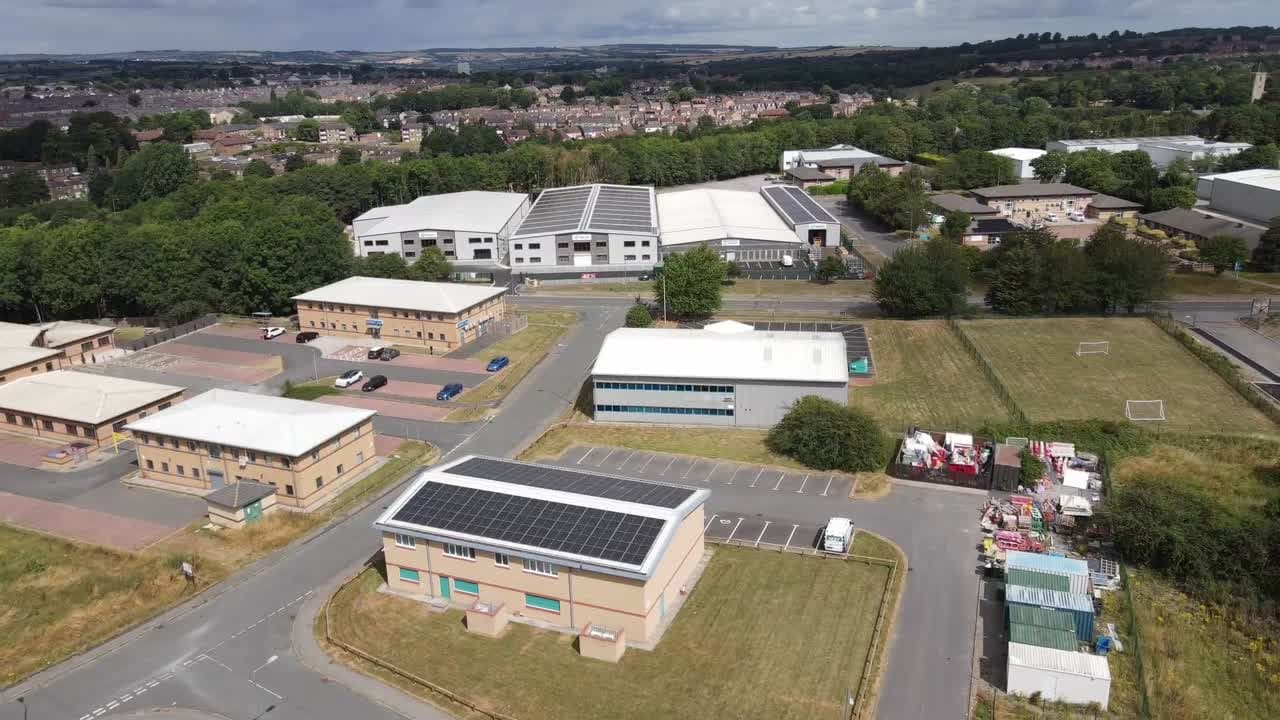
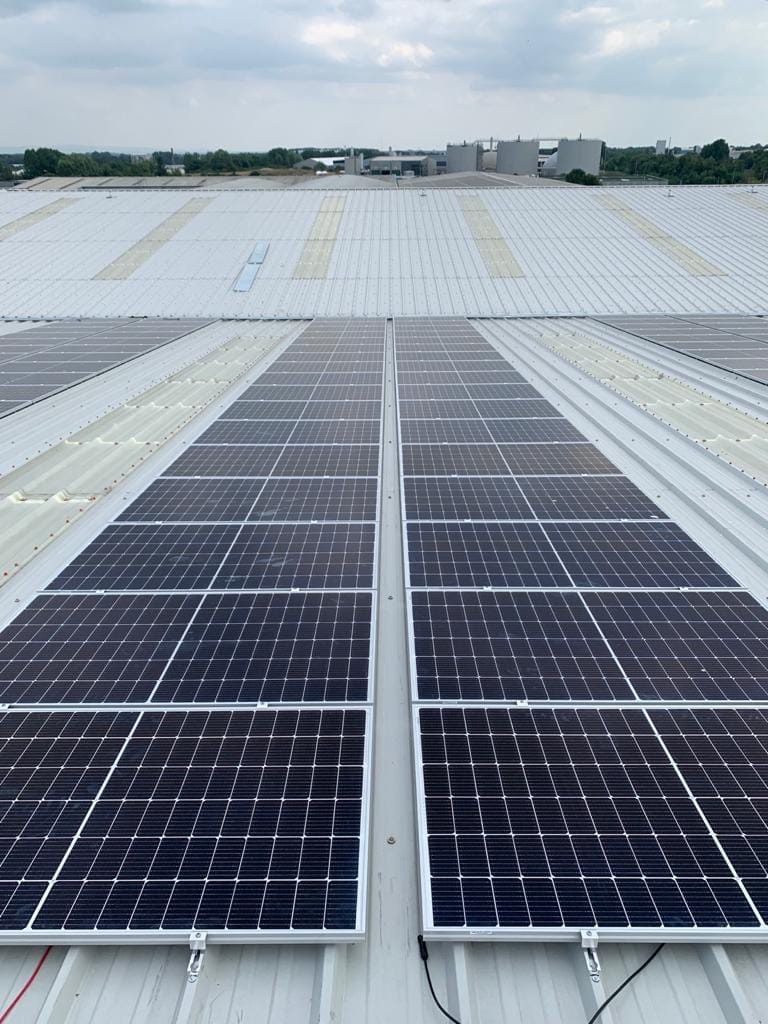
Which is why, in this county more than anywhere else we work, agricultural solar is not a sideline — across most of Northumberland it is the commercial solar market. Grain stores on the arable plain run dryers and fans hard through late summer; livestock housing carries ventilation, lighting, water heating and pump loads year-round; and the buildings themselves — wide steel portals under profiled sheet — take clamp-mounted arrays without wet trades and, on many profiles, without a single roof penetration. Where a holding’s daytime base load is genuinely small, we say so and size small: an array matched to the meter beats one matched to the roof.
The commercial weight, meanwhile, sits in the south east. Cramlington was purpose-built for industry — a 1964 new town whose zoned estates now hold pharmaceutical plants and precision manufacturers. Blyth, the county’s largest town at 39,731 people, is rebuilding itself around offshore energy and a £90 million regeneration programme. Morpeth carries the county’s administration — Northumberland County Council runs the whole county from County Hall there — alongside its own working estate at Coopies Lane. And out west, Hexham serves the farmed valleys and hosts, in Egger’s chipboard plant, the largest manufacturing employer in Northumberland.
Panel-for-panel, a Northumberland roof performs like the rest of the North East: plan on 800–950 kWh a year for each kWp installed on a well-oriented roof, with shallow-pitch sheet sheds at the bottom of that band. What the county adds is load quality. Pharma lines, port operations, timber presses and livestock buildings all draw power through daylight hours — and electricity you generate and use on site is worth its full import price, not the pennies an export meter pays.
The policy weather helps too. Northumberland County Council has pledged to make its own operations carbon-dioxide neutral by 2030, to work with government towards a carbon-dioxide neutral county on the same horizon, and to reach net-zero greenhouse gases county-wide by 2040. Its current Climate Change Action Plan runs 2024–26, and the council reports itself on track to halve its own emissions by 2025 against 2010 levels. None of that pays for your array — but planning, rates and policy in this county all lean the way you would be pushing.
One more Northumberland reality: farm and estate electrics up here have often grown in layers over decades. It matters that the firm on the roof is an electrical contractor first — if the survey finds a distribution board with no spare ways, or a supply that needs Northern Powergrid’s agreement before an inverter goes anywhere near it, the same firm deals with it, and there is one name on the whole job.
Local facts, sourced
Northumberland in numbers
-
Northumberland County Council has pledged a carbon-dioxide-neutral organisation by 2030, a carbon-dioxide-neutral county by 2030 in partnership with government, and county-wide net-zero greenhouse gases by 2040.
Source: Northumberland County Council — northumberland.gov.uk/climate-change (targets agreed November 2023)
-
The council's Climate Change Action Plan 2024–26 is in delivery, with the authority on track to halve its own carbon emissions by 2025 against 2010 levels.
Source: NCC Cabinet report, 11 June 2024 — northumberland.moderngov.co.uk; LGA case study — local.gov.uk
-
Britain's first offshore wind farm opened in Blyth Harbour on 7 December 2000 — the county has been a working renewable-energy centre for a quarter of a century.
Source: Ember — ember-energy.org; en.wikipedia.org/wiki/Blyth_Offshore_Wind_Farm
-
The Energy Central partnership around the Blyth estuary (Port of Blyth, Northumberland County Council, Advance Northumberland and the Offshore Renewable Energy Catapult) anchors a growing offshore-energy cluster, including JDR Cables' £130m subsea-cable factory at Cambois.
Source: Energy Central UK — energycentraluk.co.uk; ORE Catapult — ore.catapult.org.uk ("Levelling Up for Blyth")
-
Northumberland's population was 320,600 at Census 2021 — England's least densely populated county, at roughly 64 people per square kilometre.
Source: ONS Census 2021 — ons.gov.uk/visualisations/censuspopulationchange/E06000057/; en.wikipedia.org/wiki/Northumberland
-
Defra counts around 1.7 million sheep in the North East — 12% of England's flock — with Northumberland's valleys and hill fringes carrying a large share of the region's grazing and its steel-framed farm buildings.
Source: Defra — Agricultural facts: North East region, gov.uk (2024 data)
-
Egger's Hexham plant is the largest manufacturing employer in Northumberland and produces around half of the UK's chipboard.
Source: Egger — egger.com/en/about-us/united-kingdom; Furniture Production — furnitureproduction.net
-
The Northumberland Line reopened to passengers in December 2024 — the first regular services between Ashington, Blyth and Newcastle in around 60 years — a marker of how much investment is flowing into the county’s south east.
Source: Northumberland County Council — northumberland.gov.uk/News/2024/Dec (Northumberland Line opening)
Our work across the North East
Towns we cover in Northumberland
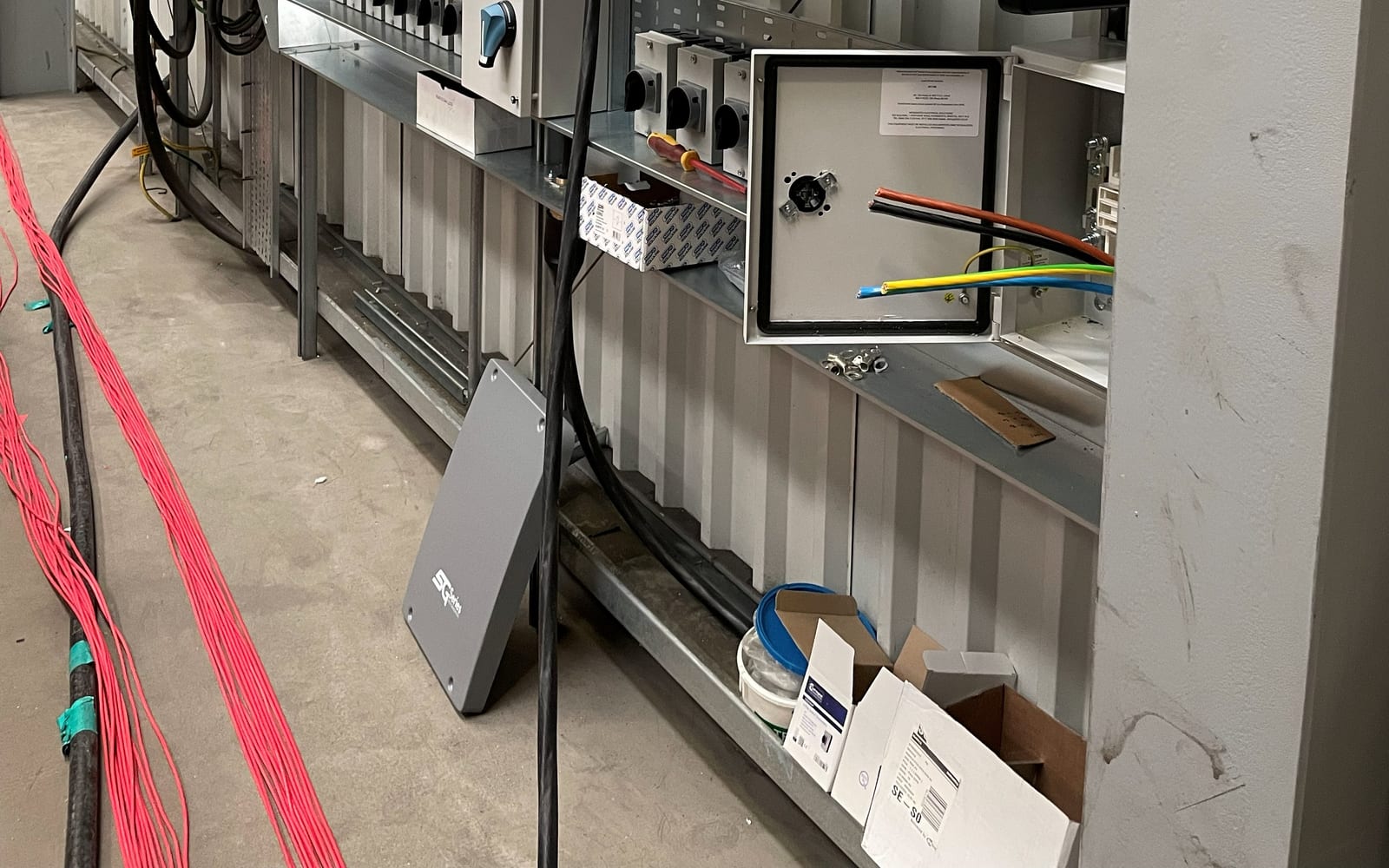
Where in the county is your building? Each town page below is researched for that town — its estates, its roof stock, its numbers — not templated.
-
Commercial solar in Morpeth
The town the county is run from: County Hall, the Coopies Lane estate and the Wansbeck valley farms.
-
Commercial solar in Cramlington
The purpose-built manufacturing town: Nelson Park, Bassington and the pharmaceutical plants.
-
Commercial solar in Blyth
Where British offshore wind began: the port, Energy Central and the estuary's working roofs.
-
Commercial solar in Hexham
The mart town: farm solar first, plus the county's biggest manufacturing employer.
And if your business is in Ashington, Alnwick or Ponteland — no dedicated page, same coverage: ask us and we will survey your building the same as any other. Berwick-upon-Tweed we will be straight about: it is a long road even by this county’s standards, and we take on larger commercial projects that far north by arrangement rather than promising an everyday service we cannot deliver well.
The far end of our patch, priced honestly
A Northumberland survey costs you nothing and us a morning on the A1 — we will not pretend to be around the corner, and we will not let the mileage blur the numbers either. Bring a year of electricity bills; we bring every assumption in the open.
Get your free, no-obligation quote
Commercial solar, battery, EV or any electrical work — no pressure.