
Commercial & Agricultural Solar
Commercial solar across Tyne & Wear
Let us start with what we are not: a Tyneside firm. G Smith Electrical is a County Durham contractor — the base is at St Helen Auckland outside Bishop Auckland, and the drive into Tyne & Wear runs somewhere between 40 and 55 minutes up the A1(M) or the A19, depending on which corner of the county your building is in. We work into Tyne & Wear rather than out of it, we do not keep an office there, and we would rather say that in the first paragraph than let a location page imply otherwise.
Here is why we make the drive. Tyne & Wear packs 1,125,695 people — Census 2021, across the five boroughs of Newcastle, Gateshead, Sunderland, North Tyneside and South Tyneside — into the most tightly built county in the North East. Where people concentrate, commercial roofs concentrate harder: this is the county with the region’s deepest stock of trading estates, distribution sheds, factory roofs and port-side warehousing, layered down over ninety years of deliberate industrial planning.
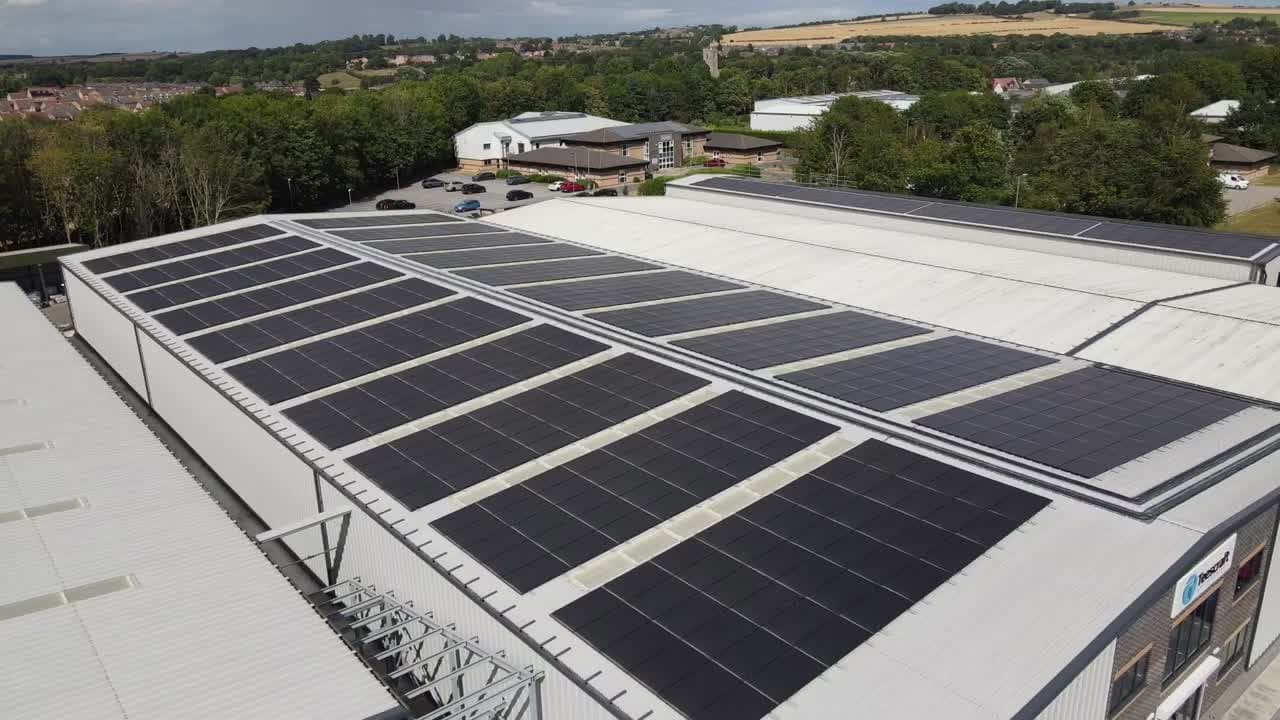
The estates themselves range from the 1930s state-planned originals to freshly consented big-box logistics land — each town page below takes its own patch in detail, because the roof on a 1937 trading-estate workshop and the roof on a 28-metre-eaves distribution shed are different jobs. What they share is the construction we like: steel frames under profiled sheet, taking clamp-mounted arrays without wet trades and, on many profiles, without a penetration.
The politics of the county pull the same direction. Since May 2024 Tyne & Wear has sat inside the North East Combined Authority — seven councils under the region’s first elected mayor, carrying a £4.2 billion, 30-year devolution settlement that includes a £1.4 billion investment fund. Underneath that, every one of the five boroughs has declared a climate emergency and set its own net-zero programme — Newcastle aiming at a net-zero city by 2030, Gateshead’s council and its energy company at zero carbon by 2030, Sunderland at a carbon-neutral city by 2040, South Tyneside’s council at 2030. The substance of each — and what it practically means for a business putting panels on a roof — is on the town pages; the point here is the pattern. There is no council in this county where commercial rooftop generation swims against the policy tide.
Two practicalities hold across the whole county. First, the grid: Northern Powergrid is the distribution network operator for every borough, so the G99 connection application — which we prepare and manage — follows one process whether your roof is in Wallsend or Washington. Second, the numbers: a well-oriented Tyne & Wear roof sits in the same 800–950 kWh per installed kWp band as the rest of the North East (shallow-pitch sheet roofs at the bottom of it), and for budgeting we point commercial clients at a planning band of roughly £700–£1,100 per kWp installed for straightforward roof work — your building’s own figure comes from a survey, not a hub page.
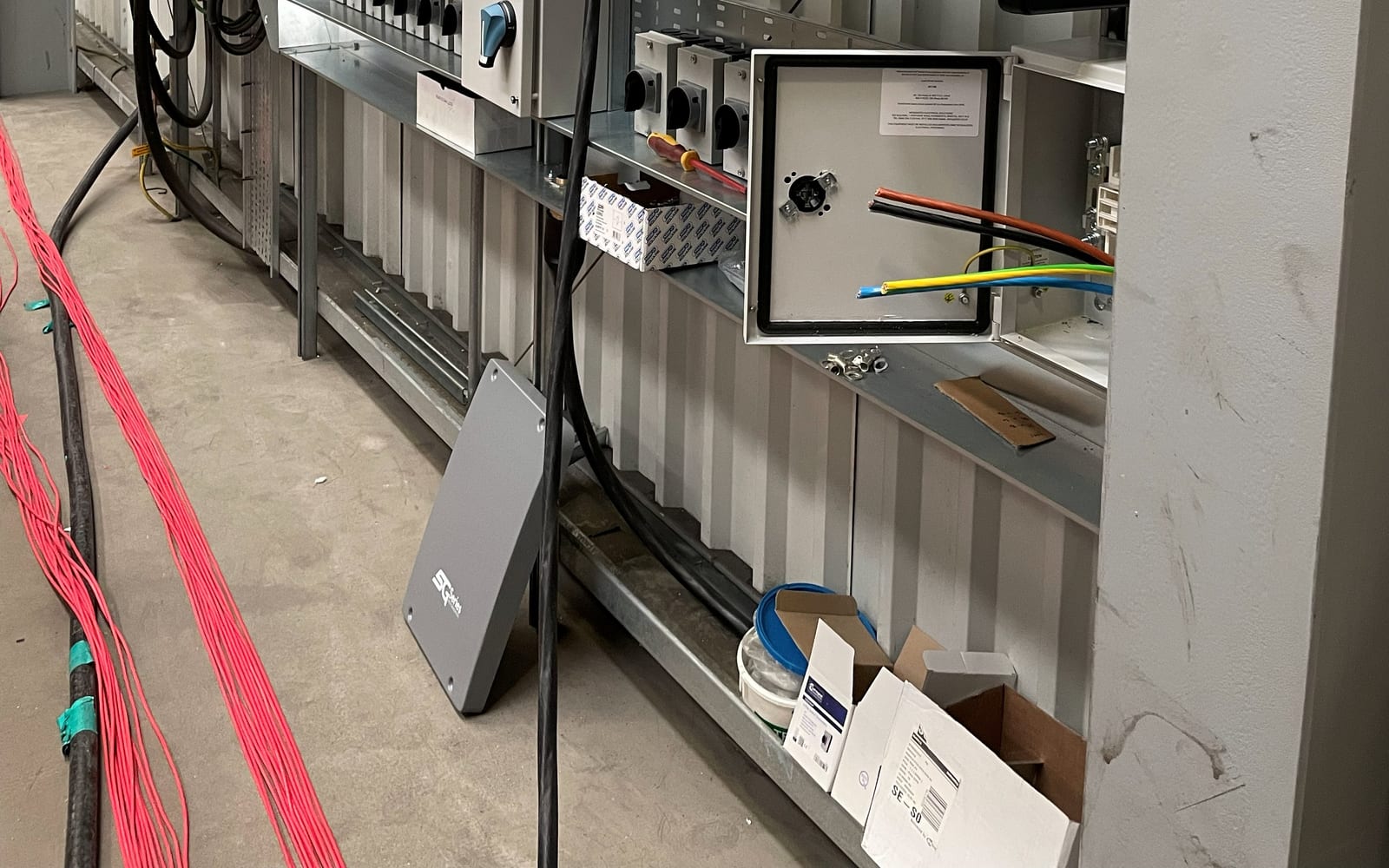
One more thing travels north with us: thirty years of electrical contracting. If a Tyneside survey turns up a distribution board with no spare ways, or a fixed-wire test overdue before anything new is connected, the same firm handles it — one contractor, one accountable name, whichever side of the Tyne you are on.
Local facts, sourced
Tyne & Wear in numbers
-
Tyne & Wear's population was 1,125,695 at Census 2021, across five metropolitan boroughs — the most urbanised county in the North East, and the densest concentration of commercial roof stock on our patch.
Source: ONS Census 2021 — via citypopulation.de (E11000007)
-
Since May 2024 the county has sat inside the North East Combined Authority, under the region's first elected mayor, with a £4.2 billion 30-year devolution settlement including a £1.4 billion investment fund.
Source: Newcastle City Council devolution announcements — newcastle.gov.uk; South Tyneside Council — southtyneside.gov.uk/article/16978
-
All five Tyne & Wear boroughs run net-zero programmes: Newcastle targets a net-zero city by 2030, Gateshead's council and energy company zero carbon by 2030, Sunderland a carbon-neutral city by 2040, and South Tyneside a carbon-neutral council by 2030.
Source: Each council's published climate plan — newcastle.gov.uk; gateshead.gov.uk; sunderland.gov.uk/lowcarbon; southtyneside.gov.uk
-
One distribution network operator — Northern Powergrid — covers the entire county, so the G99 grid-connection process for commercial solar is identical from Newcastle to Sunderland.
Source: Northern Powergrid — northernpowergrid.com
-
The River Tyne's development sites are marketed nationally as the Energy Gateway — an established offshore, subsea and clean-energy cluster along both banks of the river.
Source: Invest North East England — investnortheastengland.co.uk/energy-gateway
-
Every Tyne & Wear borough is 40–55 minutes' drive from our St Helen Auckland base via the A1(M) or A19 — inside our working range, planned honestly as travelling work, not pretended localism.
Source: Measured road routes (Google Maps), St Helen Auckland DL14 → NE1 / NE11 / SR1 / NE37 / NE33
Our work across the North East

Towns we cover in Tyne & Wear
Where in the county is your building? Each page below is researched for its own town — different estates, different roof stock, different numbers.
-
Commercial solar in Newcastle upon Tyne
The one place on our patch where the flat roof and the conservation street matter as much as the shed, plus the offshore-energy corridor at Walker.
-
Commercial solar in Gateshead
Team Valley, Britain's first state-planned trading estate, and the Follingsby logistics corridor.
-
Commercial solar in Sunderland
The city where the North East's biggest manufacturer already generates on site, and the supply chain around it.
-
Commercial solar in Washington
The new town whose estates are named after engineers, mid-way between the A1(M) and the A19.
-
Commercial solar in South Shields
South Tyneside's coast and port, including Jarrow and Hebburn.
And if your business is in Jarrow, Hebburn or Boldon, the South Shields page covers your patch directly. North of the river in North Tyneside — North Shields, Wallsend, Whitley Bay, Killingworth — we have no dedicated pages, but the coverage is the same: ask us and we will survey your roof like any other.
A straight answer, either side of the Tyne
We will not claim a Tyneside address — just a van that knows the A1(M) and a survey that tells you whether your roof pays. Bring your last year’s electricity bills; we bring the numbers.
Get your free, no-obligation quote
Commercial solar, battery, EV or any electrical work — no pressure.