
Commercial Solar · Tyne & Wear
Commercial solar in Gateshead — Team Valley and beyond
In 1936 the government drained a boggy stretch of the Team valley and started building something Britain had never had: a state-planned trading estate. Nearly £2 million of Special Areas funding, a masterplan by William Holford — 29 years old at the time — and colliery waste to firm up the ground. Ninety years later, Team Valley Trading Estate carries more than 700 businesses and around 20,000 workers across 700 acres — still the largest concentration of commercial roof on our patch.
For a solar contractor that is not trivia; it is the point. One postcode district — NE11 — holds acre after acre of steel-framed buildings under profiled sheet, the exact construction clamp-mounted arrays were designed for, with much of it managed by a single estate landlord. We reach the estate’s southern entrance in 35 to 40 minutes from our St Helen Auckland base — straight up the A1(M), past the Angel of the North, which has watched that approach since 1998. We are County Durham-based and travel in; on a run this direct, distance costs you nothing.
Solar on Gateshead's commercial buildings
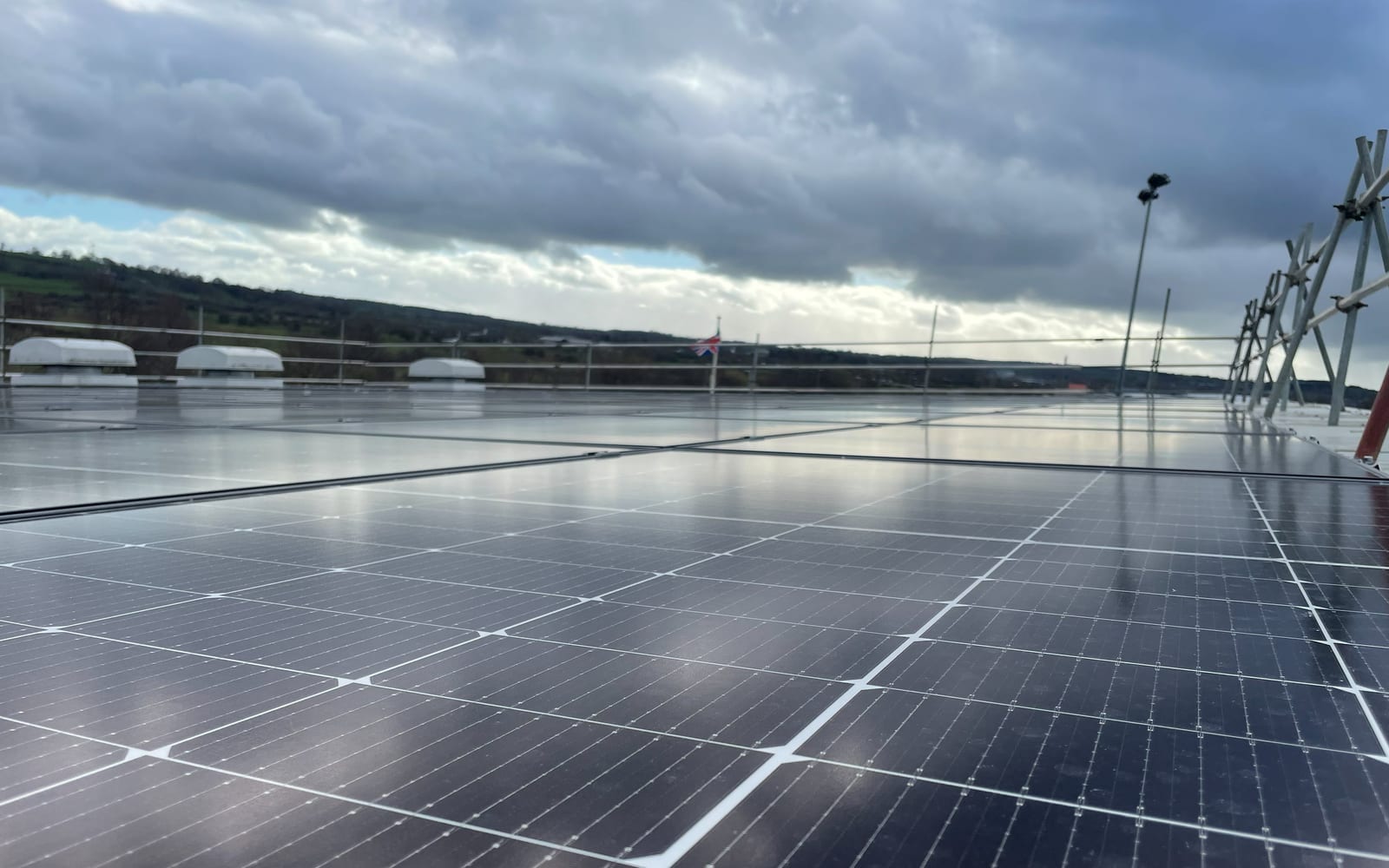
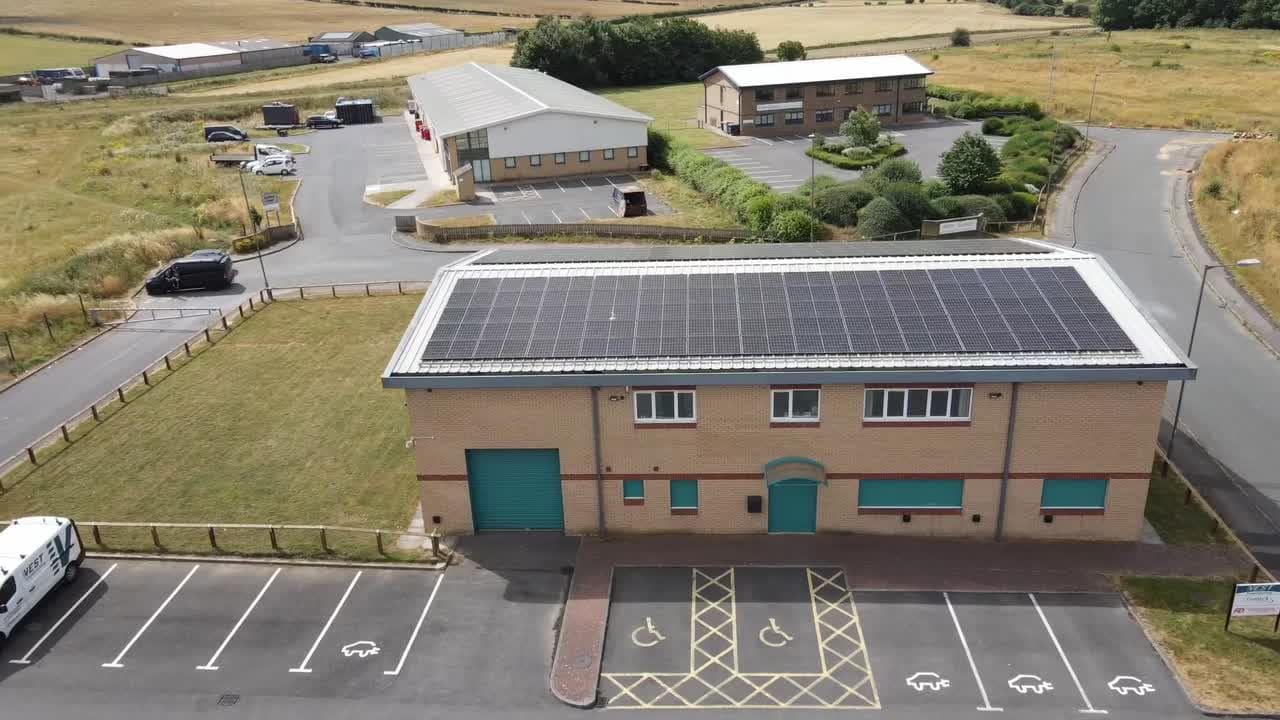
Put a Team Valley number on it. A 150 kWp array — mid-size for the estate’s factory and warehouse units — returns roughly 120,000–142,500 kWh a year at North East yields, shallow-pitch sheet roofs sitting toward the bottom of that range. The estate’s mix works in solar’s favour: manufacturing, trade counters, offices and the Retail World cluster all draw their power in daylight hours, so generation is consumed on site at full import value rather than exported for a fraction of it.
The honesty that goes with a ninety-year-old estate: the roofs span every decade since the thirties. Plenty of units have been re-clad and take a clamp-mounted array without drama; older sheets and fixings need a hard look before anyone talks panels. Our survey starts at the purlins, not the brochure — and if a roof needs re-sheeting first, we say so, because an array on a dying roof is money buried twice.
East of the town, the scale changes shape. Follingsby Park near the A194(M) is a modern 110-acre logistics estate — over a million square feet in 46 units, with occupiers including Amazon, IKEA and FedEx — and the consented Follingsby Max scheme adds capacity for up to 2.5 million square feet of high-bay distribution space with eaves to 28 metres. Sheds like that are where commercial solar becomes infrastructure: roof plates measured in acres, supplies that may run at high voltage, and G99 grid applications that shape the design before a rail is lifted. Grid-first sequencing is native work for an electrical contractor — and if the wider job needs board upgrades, distribution work or fixed-wire testing alongside the array, one firm carries the whole scope.
What Gateshead Council is doing
Gateshead’s council does something rarer than declaring targets: it operates energy infrastructure. The Gateshead District Energy Scheme, launched in 2017 and run through the council-owned Gateshead Energy Company, heats and powers hundreds of homes and some twenty town-centre buildings — and since a £5.9 million heat-network investment added a 6 MW mine-water heat pump, it has run as the UK’s largest operating mine-water geothermal network, drawing warmth from the flooded workings under the town. Both the council and its energy company are committed to zero carbon by 2030.
A council that mines heat from abandoned coal workings is not going to blink at panels on a factory roof. Most estate rooftop arrays proceed under permitted development; where a larger system needs prior approval, we prepare it. In Gateshead, local energy generation is already civic policy, not a novelty.
Local facts, sourced
Gateshead in numbers
Every figure below comes from a named public source — the same standard we hold our savings estimates to.
-
Team Valley Trading Estate — laid out from 1936 with nearly £2m of Special Areas funding, to a masterplan by 29-year-old William Holford — was Britain's first state-planned trading estate; today it carries 700+ businesses and around 20,000 workers on 700 acres.
Source: en.wikipedia.org/wiki/Team_Valley; UK Land Estates — uklandestates.co.uk/estate/team-valley-trading-estate
-
Follingsby Park is a 110-acre logistics estate holding over one million sq ft across 46 units, with occupiers including Amazon, IKEA and FedEx.
Source: Invest Gateshead — investgateshead.com/article/2128; Savills
-
The consented Follingsby Max scheme adds up to 2.5 million sq ft of high-bay distribution space with eaves heights to 28 metres — big-shed roof plates on an infrastructure scale.
Source: Invest North East England — investnortheastengland.co.uk/planning-approved-for-follingsby-park
-
The council-owned Gateshead District Energy Scheme is the UK's largest operating mine-water geothermal heat network — a 6 MW mine-water heat pump backed by £5.9m of heat-network funding — with both council and energy company committed to zero carbon by 2030.
Source: Gateshead Council — gateshead.gov.uk; Heat Networks (GHNF) — tp-heatnetworks.org
-
The Angel of the North — 20 metres tall, 54-metre wingspan, standing beside the A1 since 1998 and passed by an estimated 33 million people a year — marks the southern approach to Gateshead’s estates.
Source: Gateshead Council — gateshead.gov.uk/article/5303; en.wikipedia.org/wiki/Angel_of_the_North
-
Gateshead's built-up area was home to 120,046 people at Census 2021.
Source: ONS Census 2021 — via en.wikipedia.org/wiki/List_of_settlements_in_Tyne_and_Wear_by_population
Data last reviewed: July 2026
Our work across the North East
The next step
From a 1937 workshop to a 28-metre shed, the question is the same: what would your roof return? Start with the Tyne & Wear hub, read how we design commercial systems, or ask us to walk the roof.
Gateshead commercial solar questions
We lease our unit on Team Valley — how does solar work with an estate landlord?
Through a structured consent, and it is well-trodden ground. The landlord will want the structural calculations, the fixing method, the installer’s insurances and a reinstatement position — a technical pack we prepare as standard. Much of Team Valley sits with a single managing landlord, which helps: one set of requirements, satisfied once. We put the technical case together; the lease conversation is yours, and we support it with drawings and data.
Our building is one of the estate's older ones — is the roof a lost cause?
Not automatically, but it earns a harder survey. Team Valley’s stock spans nine decades; many older units have been re-sheeted over the years and take arrays cleanly, while original sheets may fail on corrosion, fixings or purlin capacity. The survey settles it in an hour or two — and where the answer is "re-roof first," hearing it before you commit is the cheapest bad news you will ever get.
Does a Follingsby-scale distribution shed change the engineering?
Completely — and that is where projects are won or lost. On roof plates that size the questions become string design across acres of sheet, inverter placement, possible high-voltage supply arrangements, and a G99 application to Northern Powergrid agreed before installation, sometimes with an export limit. A battery can also earn its place at this scale, shifting surplus into evening operations. It is grid engineering with panels on top — our home ground.
Gateshead has a heat network — is that an alternative to solar?
They answer different bills. The district energy scheme supplies heat (and some power) to connected town-centre buildings; rooftop solar cuts the electricity you buy at your own meter, wherever your building stands. For most estate businesses the network is not on offer and the roof is — and where a building could touch both, they stack: heat from the network, daytime power from the roof.
Nearby
We also cover solar for Sunderland businesses, Washington commercial solar installers and commercial solar in South Shields.
Get a straight answer for your Gateshead site
Get your free, no-obligation quote
Commercial solar, battery, EV or any electrical work — no pressure.