Farms & agriculture
A steel portal-frame shed is close to the ideal solar host — large, unshaded and simple. We size to the load (dairy, refrigeration, poultry, grain drying), not just the roof.
Commercial · Agricultural · Public sector · Homes
Quick answer
Solar PV in the North East, for homes and businesses:
Figures: European Commission PVGIS (modelled for Durham) and 2026 installed-cost bands.
For your business
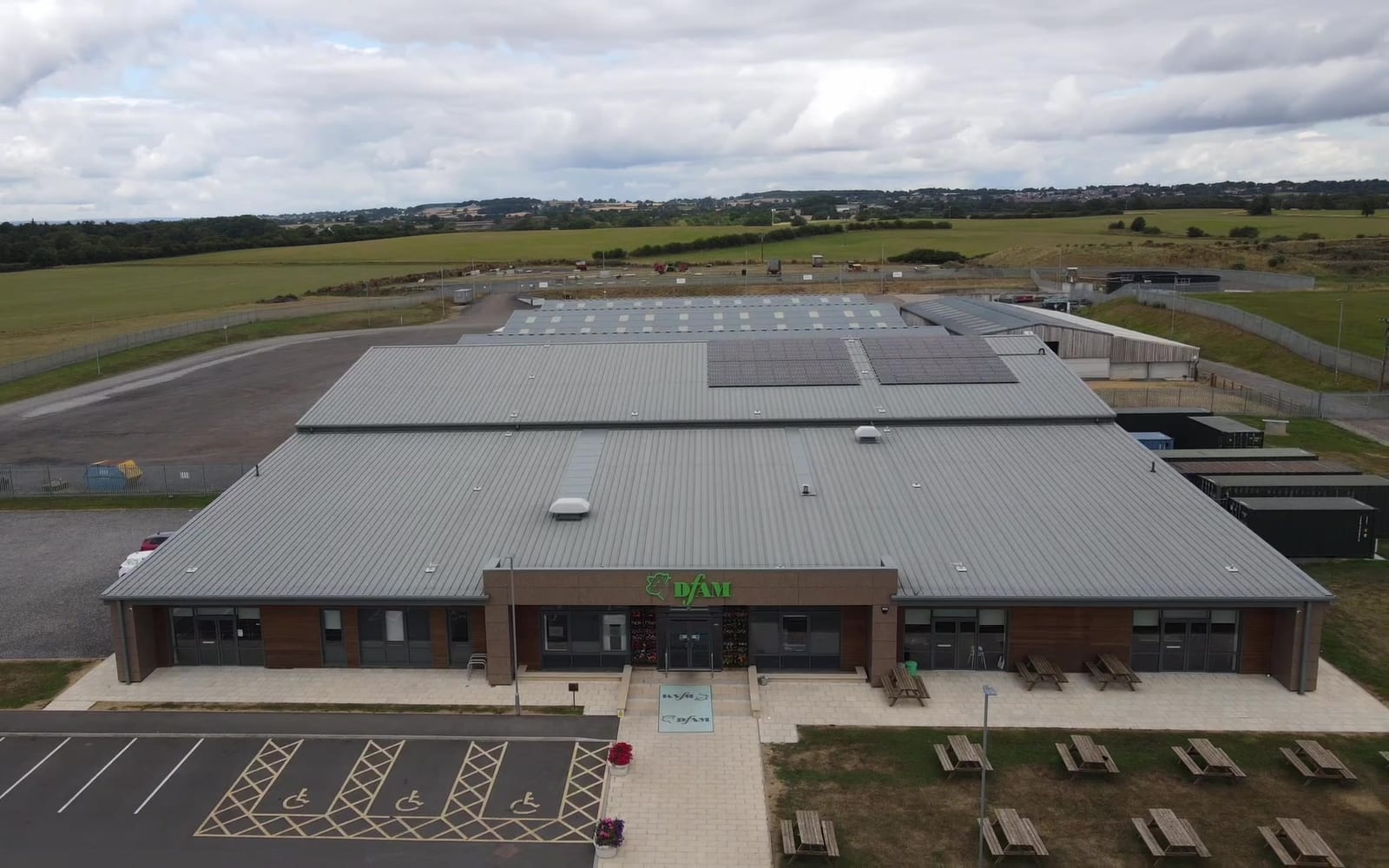
This is where solar pays hardest. A building that uses its electricity in the daytime — a warehouse, a factory, a dairy — is using it exactly when the panels make it, and that self-consumption is what drives the return. Commercial rooftop systems install for roughly £700–£1,100 per kWp in 2026, most need no planning application, and the array is exempt from business rates until 31 March 2035.
We quote fixed and itemised from a survey — purlin condition, fixing type, remaining roof life and metering answered before the price, not after.
For your home
The same team that wires warehouses fits solar on houses, and the logic is identical — just smaller. We are MCS-certified and NICEIC-registered, so the paperwork is done properly and your system qualifies for the Smart Export Guarantee. A typical pitched roof needs roughly six square metres per kWp, and a well-oriented North East roof generates around 850 kWh per kWp a year — the same mid-band figure we plan commercial systems around.
We size for the electricity you actually use in the daytime and early evening first, because a unit you use is worth far more than one you export — and we say plainly when a battery does or does not earn its place. The survey is free, and there is no pushy sales script at the end of it.
Who we build for
The same install, sized to very different buildings — here is where commercial and agricultural solar does its best work.
A steel portal-frame shed is close to the ideal solar host — large, unshaded and simple. We size to the load (dairy, refrigeration, poultry, grain drying), not just the roof.
The strongest economics we see: the building uses its power in the daytime, when the panels make it. Sheet-metal and trapezoidal roofs take clamp-mounted arrays fast.
Flat roofs take ballasted arrays sized to the load capacity; procurement teams get the same itemised, fixed-price quote as everyone else.
In scope and genuinely so — but slower, consent-led and designed for concealment before yield. We say that at the first conversation, not after a refusal.
Plan around these
A 100 kWp array — the size a mid-sized warehouse roof carries comfortably — lands somewhere around £80,000 at the mid-band, before the tax treatment. Business premises are standard-rated for VAT, recoverable in the normal way; homes are zero-rated.
£700–£1,100
Installed cost
per kWp · scale moves you through the band
~850 kWh
Annual yield
per kWp · well-oriented NE roof (mid-band)
~6 m²
Roof area
per kWp pitched · 8–10 m² if flat
The mounting is where it is won or lost
Panel brochures are interchangeable. Roofs are not, and the mounting engineering is where a commercial install is won or lost. What the building offers decides the method — and, on one material, whether we will build at all.
PVGIS · run for Durham
Most solar calculators quote a national average. We ran the European Commission’s PVGIS model for a Durham location instead, at 14% system losses, per kWp installed. 800–950 kWh is the honest planning band for a well-oriented roof, and our modelling uses 850 as its central, deliberately mid-band figure.
~937 kWh
35° south-facing pitch
per kWp per year
~841 kWh
10° south-facing (a typical sheet roof)
per kWp per year
~770 kWh
10° facing east or west
per kWp per year
“Five to eight years” is the payback planning band, so here is where it comes from rather than a bare claim. Take a 100 kWp warehouse array at £80,000:
Now the honest sensitivities. A continuous operation — cold storage, shift manufacturing — pushing self-use to 85% brings that toward six years; a site using only half its generation stretches toward nine, which is when a battery, or simply a smaller array, is the better answer and the one we will recommend. And the tax treatment moves the whole picture: claimed under the Annual Investment Allowance, the full £80,000 can be deducted from taxable profits in year one — up to £20,000 off the year’s bill at the 25% main rate of corporation tax — which takes the effective payback in this example to a little over five years. That is why five to eight years is the band we plan around for a daytime-heavy business, and why we would still rather model yours from your own consumption data than hand you an average.
Two audiences, one installer
The panels are the same. What changes between a house and a commercial building is the tax, the rates and the grid paperwork.
| For your home | For your business | |
|---|---|---|
| VAT on the installation | Zero-rated | Standard-rated — recoverable as input tax if VAT-registered |
| Business rates | Not applicable | Exempt to 31 March 2035 |
| Planning | Usually permitted development | Usually permitted development; prior approval above 50 kW |
| Grid connection | Usually a G98 notification | Usually a G99 application, agreed before export |
| Tax relief | — | AIA or 50% special-rate first-year allowance |
| Certification | MCS-certified install | MCS-certified install |
Read the small print with you
Eligible onsite renewable generation and storage — rooftop solar included — is 100% exempt from business rates in England to 31 March 2035, applied automatically by the Valuation Office Agency. No form, nothing to claim.
Solar is special-rate plant, so the common “100% full expensing” claim is wrong. What is available is the 50% special-rate first-year allowance, or often the Annual Investment Allowance at 100% up to £1m. Confirm with your accountant — we give them the figures.
The Smart Export Guarantee obliges larger suppliers to offer export tariffs up to 5 MW. But a unit used on site is worth your full import rate and an exported unit a fraction of it — so we size for self-consumption first.
Our own work
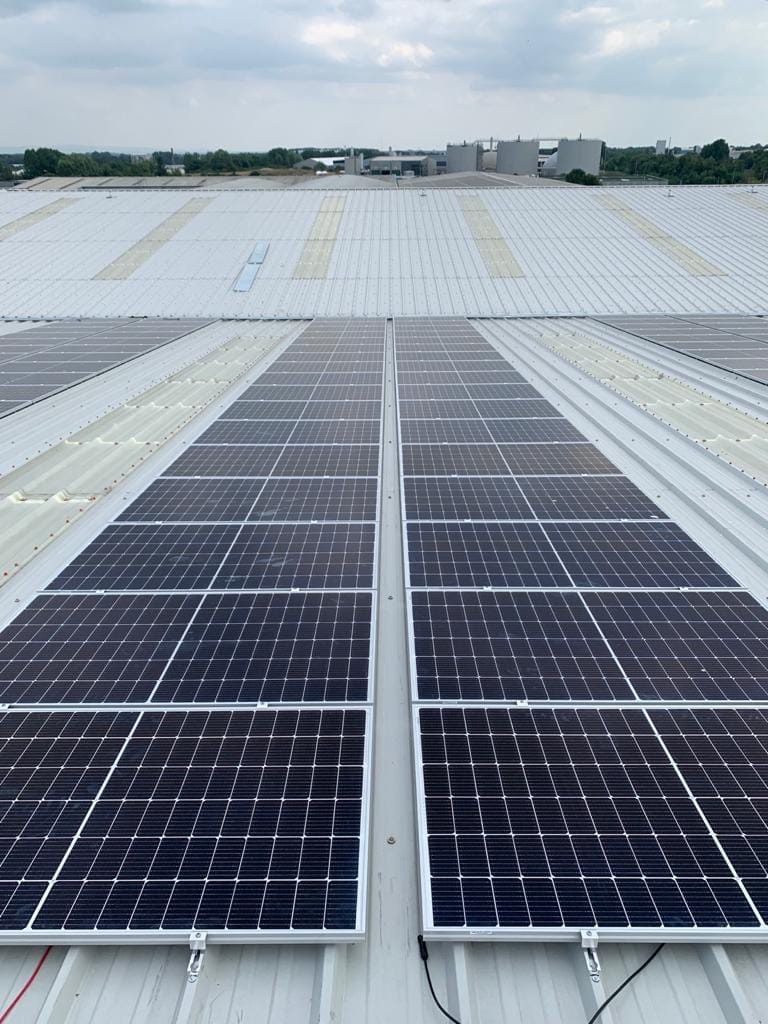
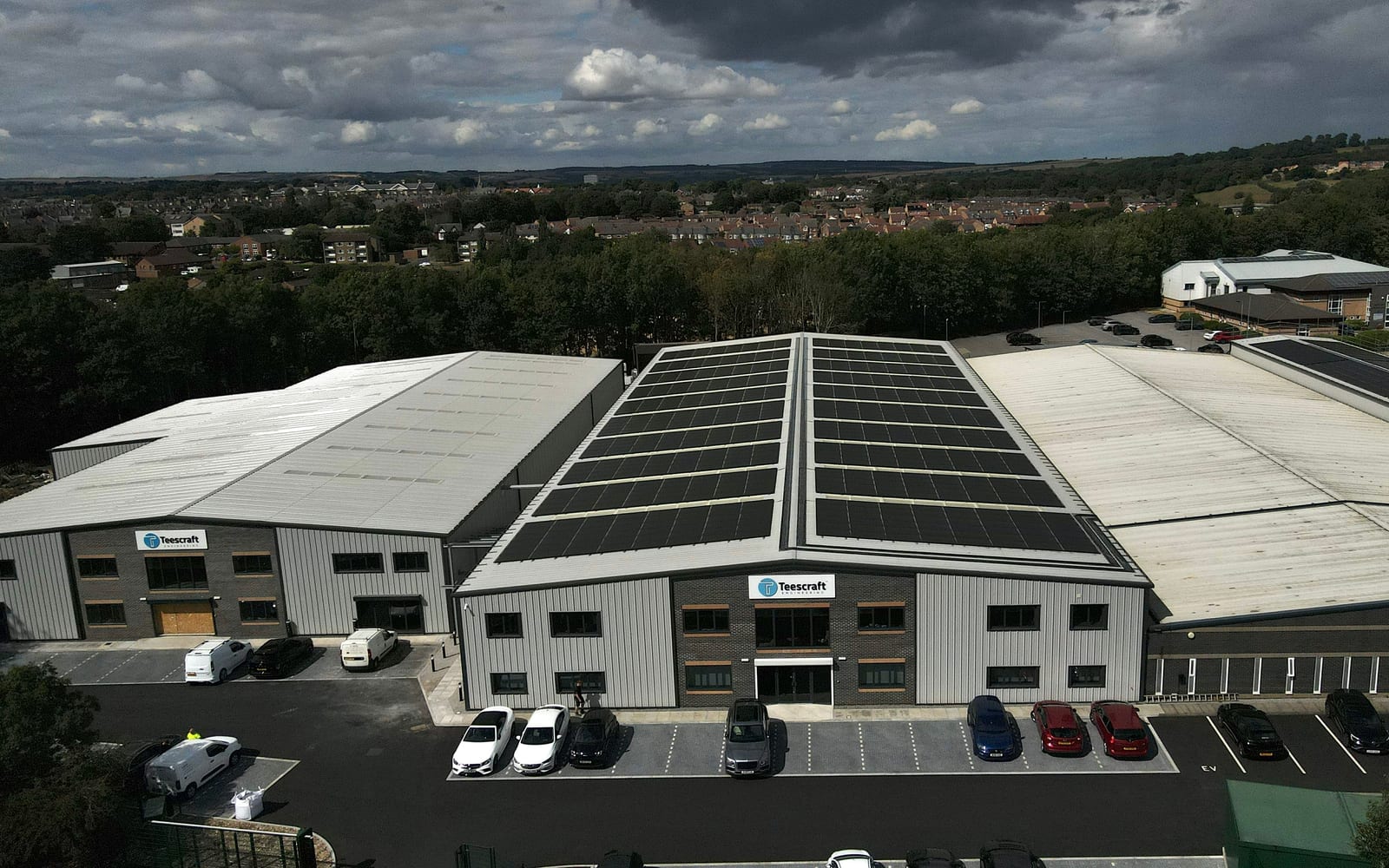
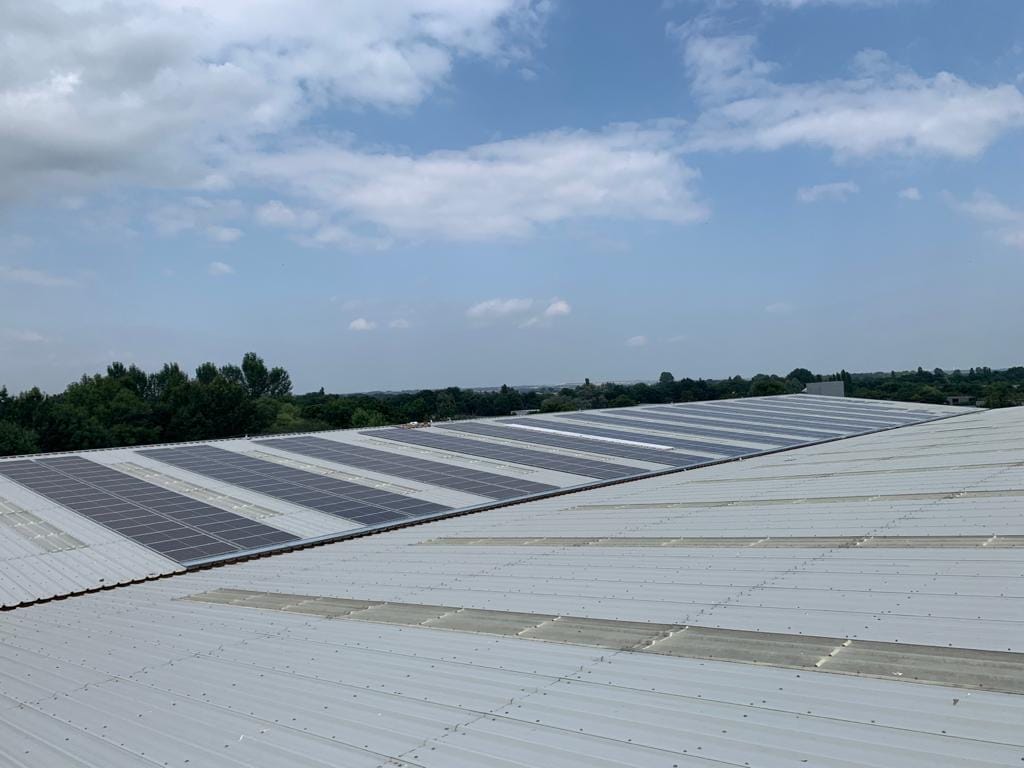
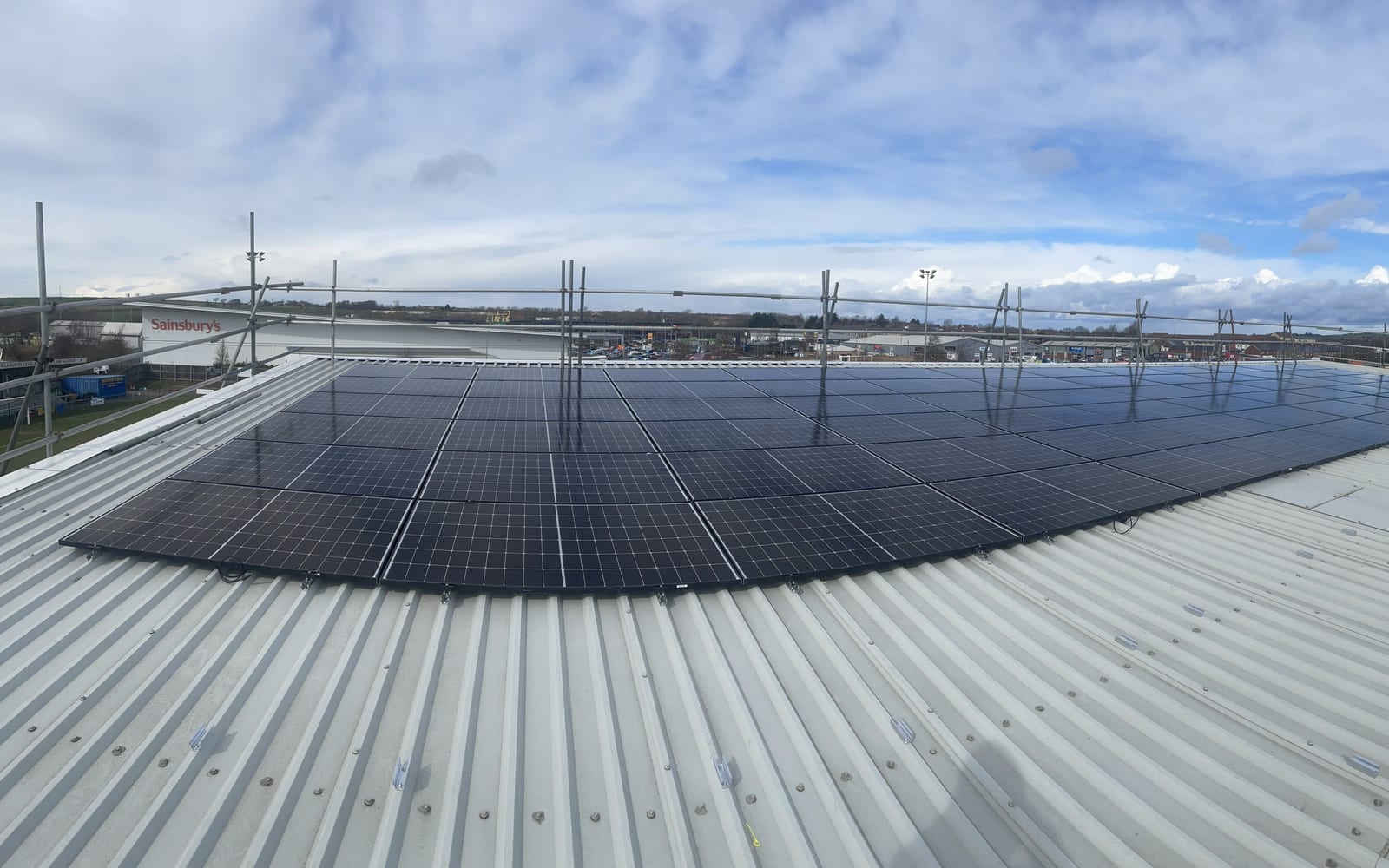
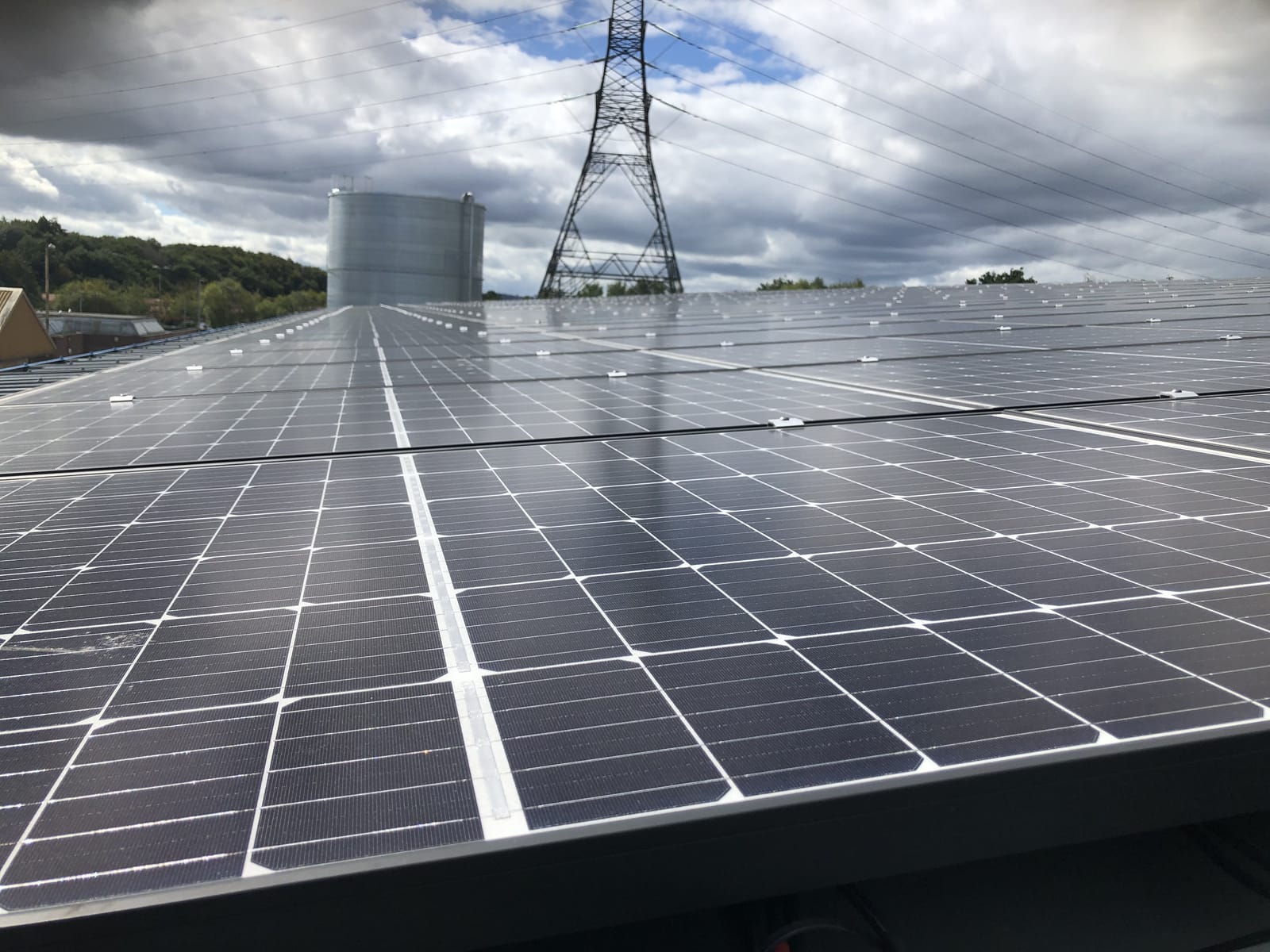
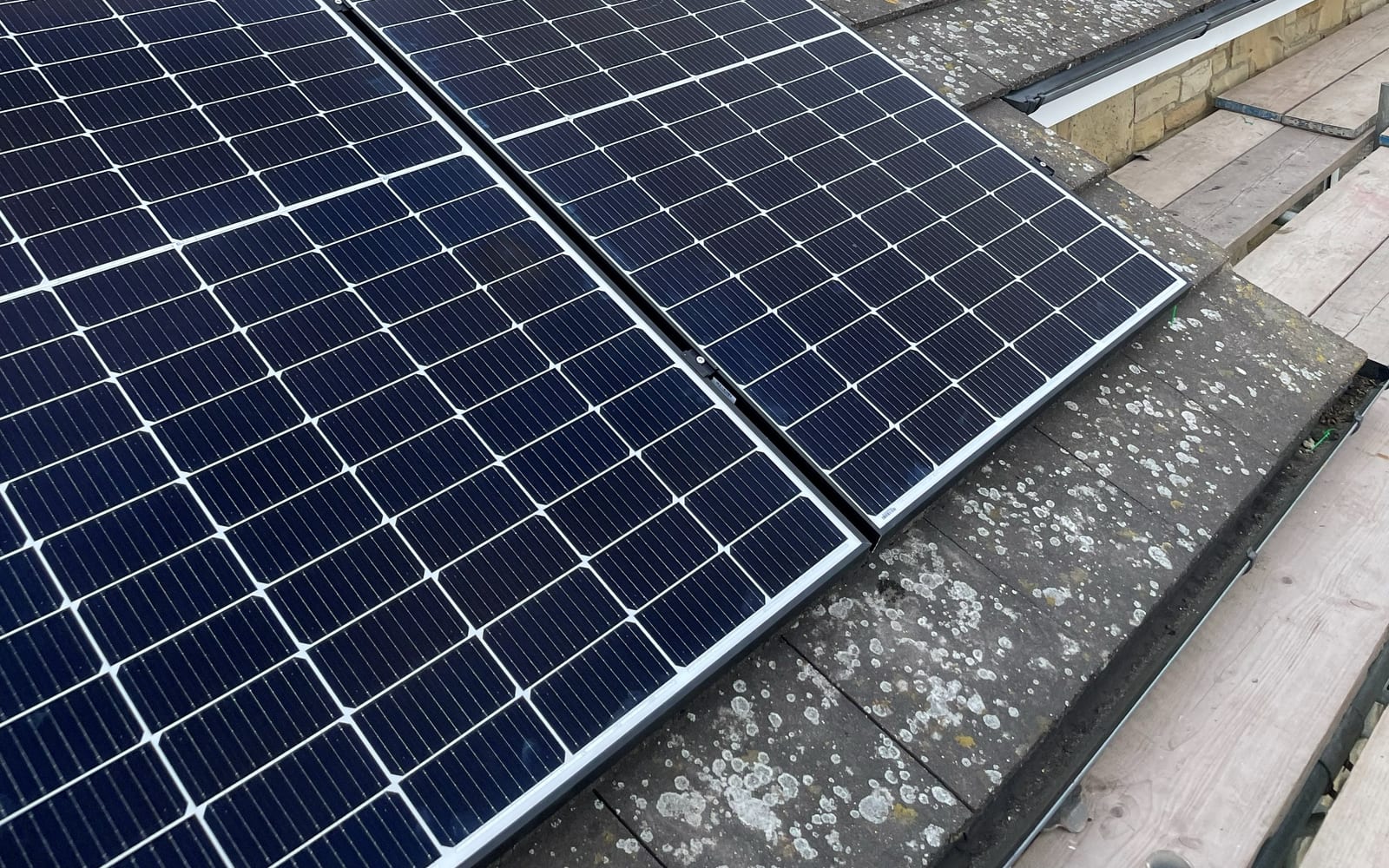
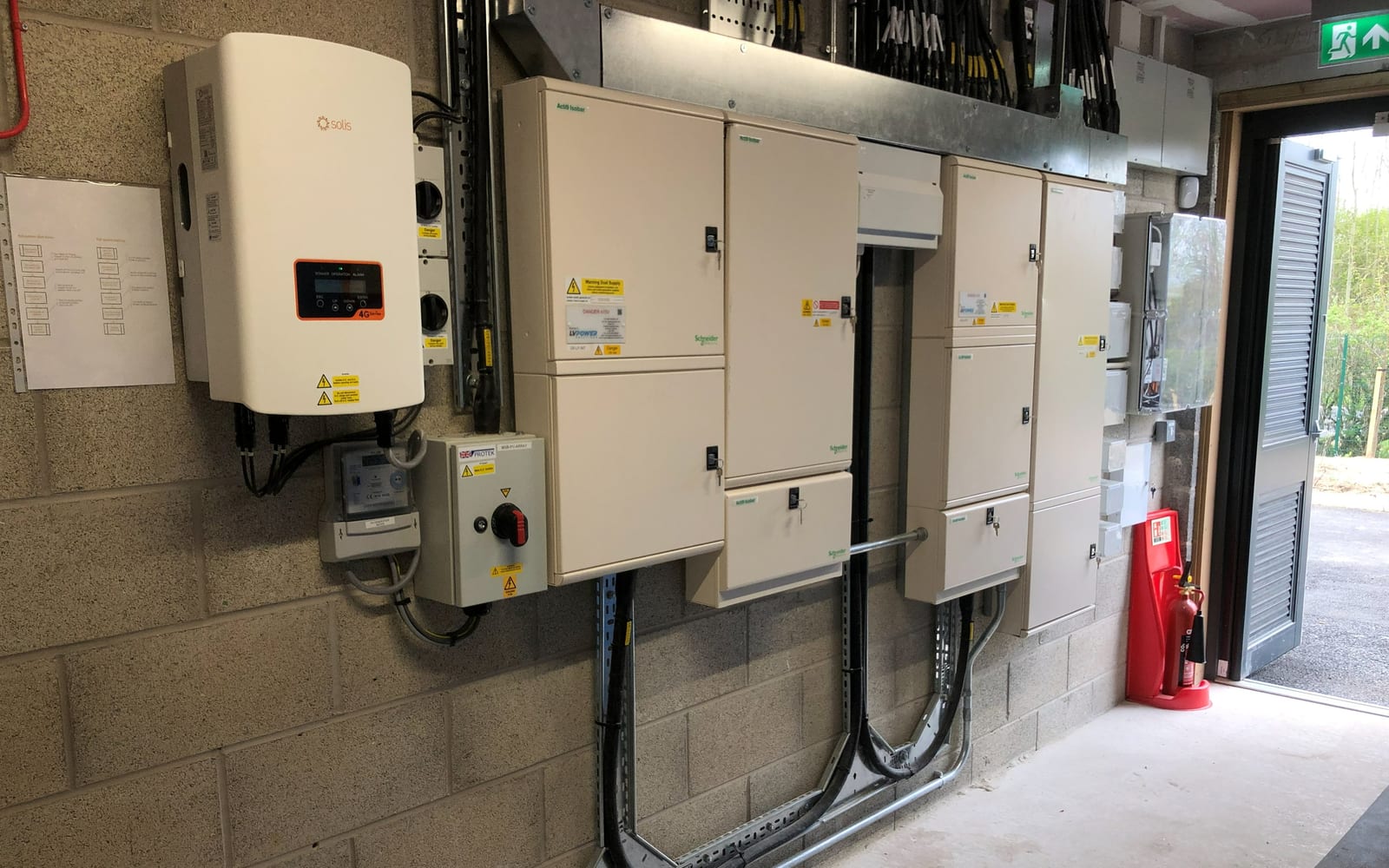
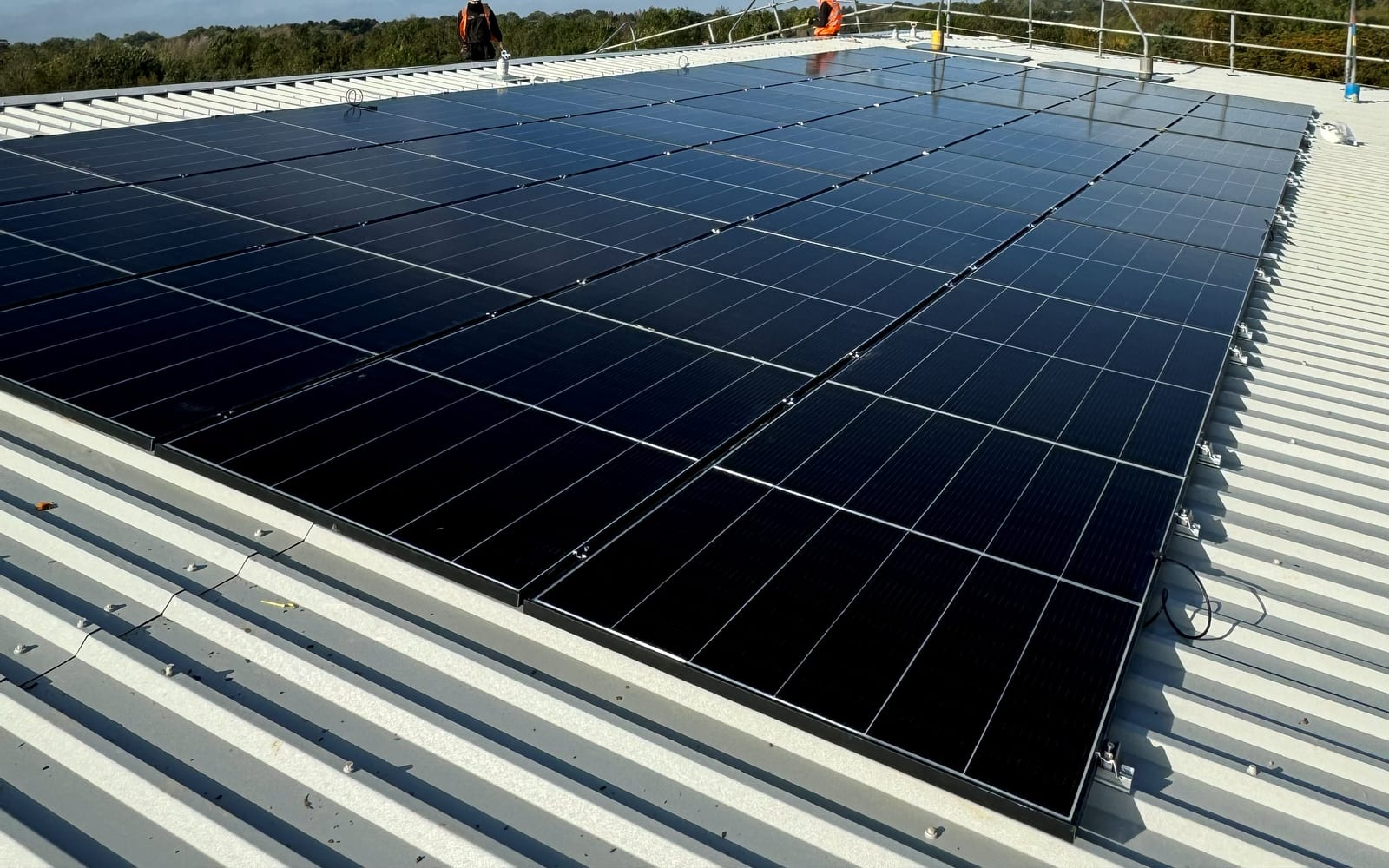
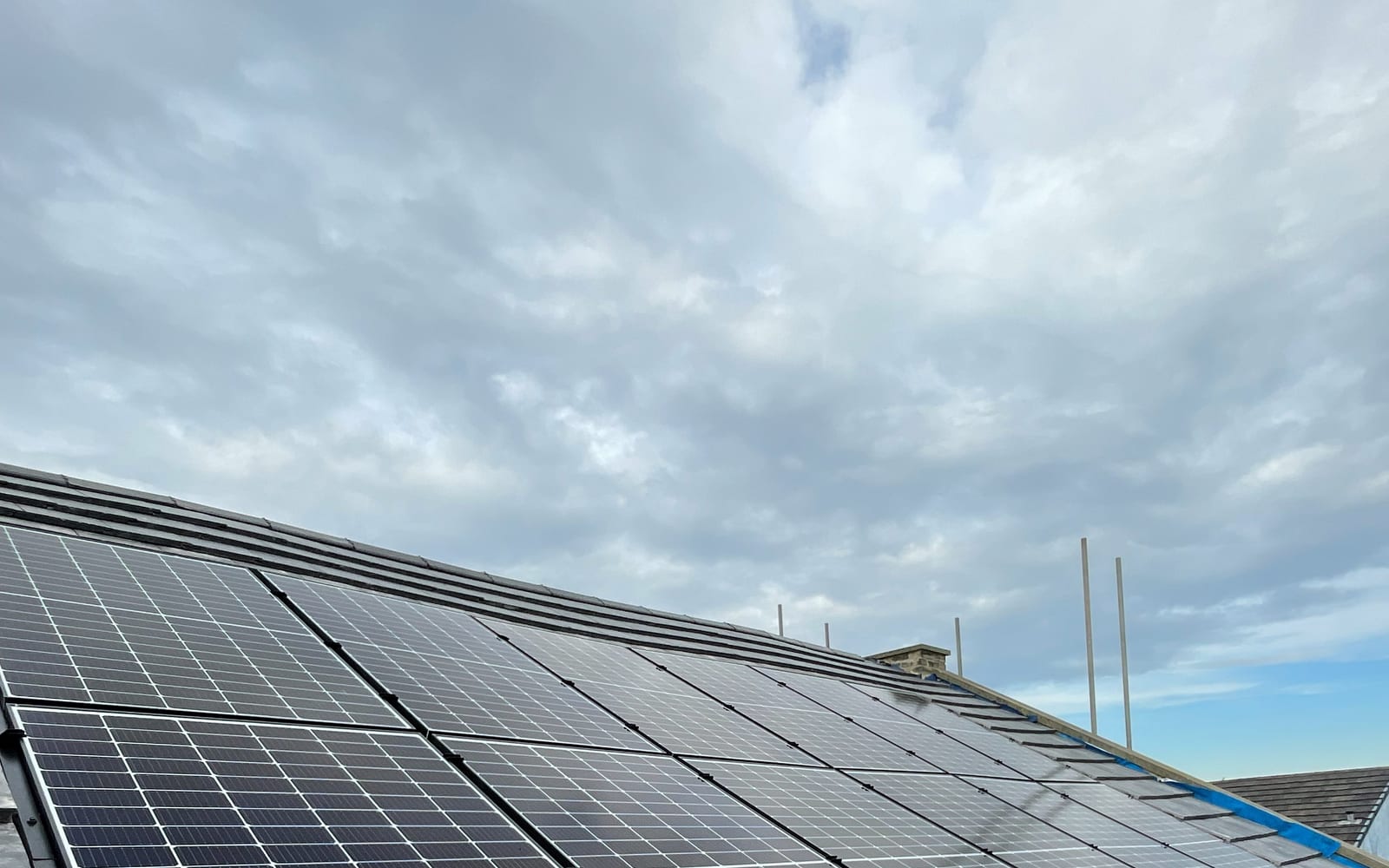
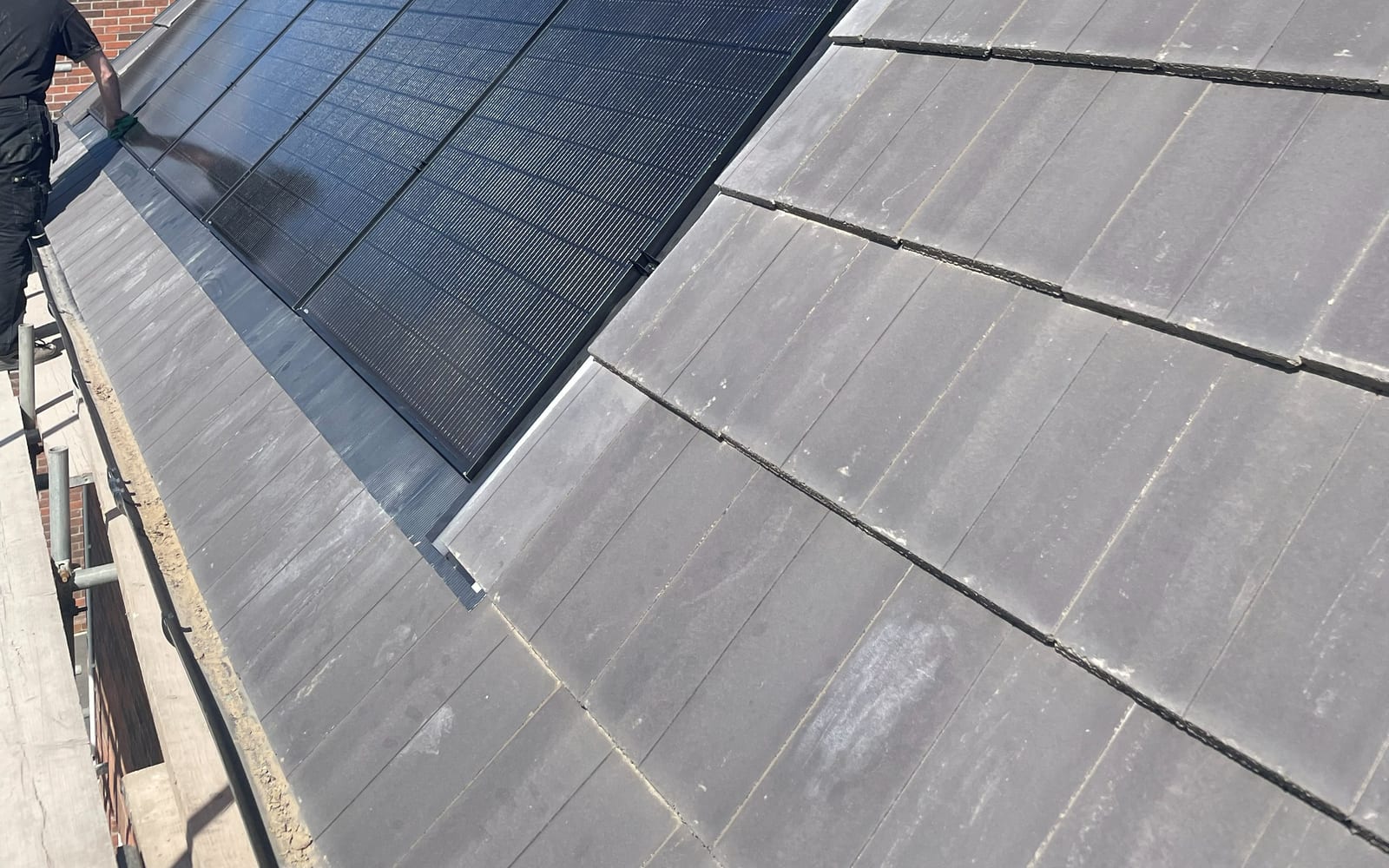
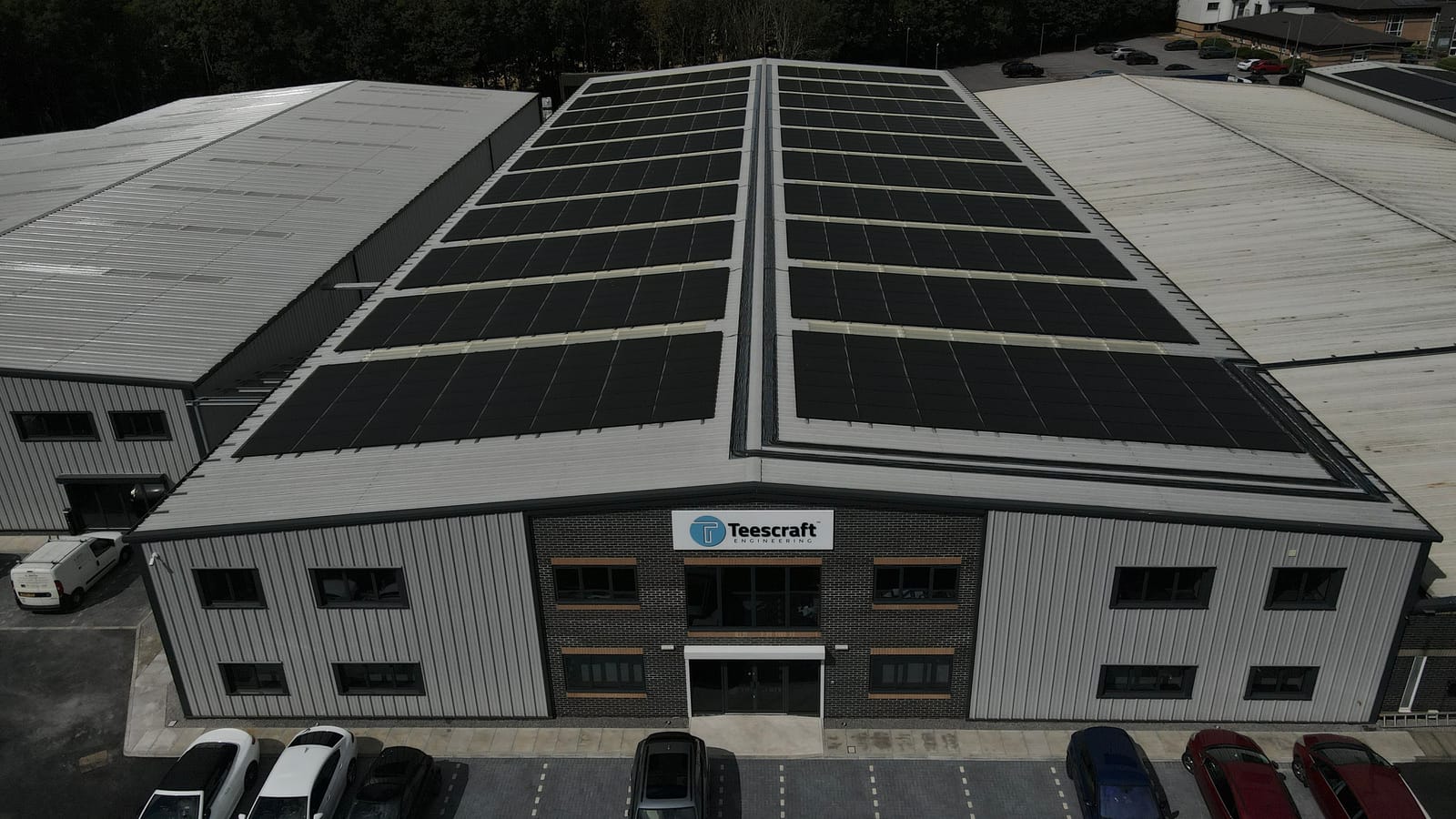
Real project photography from our own jobs — sheet roofs, roofscapes and warehouse arrays, no stock imagery.
Start to finish
The same four stages for a farm shed or a factory roof — the grid application is the long pole, so it goes in first.
We look at the roof, the load and the meter — purlin condition, fixing type, remaining roof life and orientation — before quoting a thing.
Fixed, itemised design, with the G99 connection application to Northern Powergrid submitted early because it often takes longer than the install itself.
Clamp-mounted arrays on sheet and standing-seam roofs — fast, no wet trade — wired and protected by the electrical contractor in-house.
Tested, commissioned and signed off with the G99 paperwork and electrical certification complete at handover.
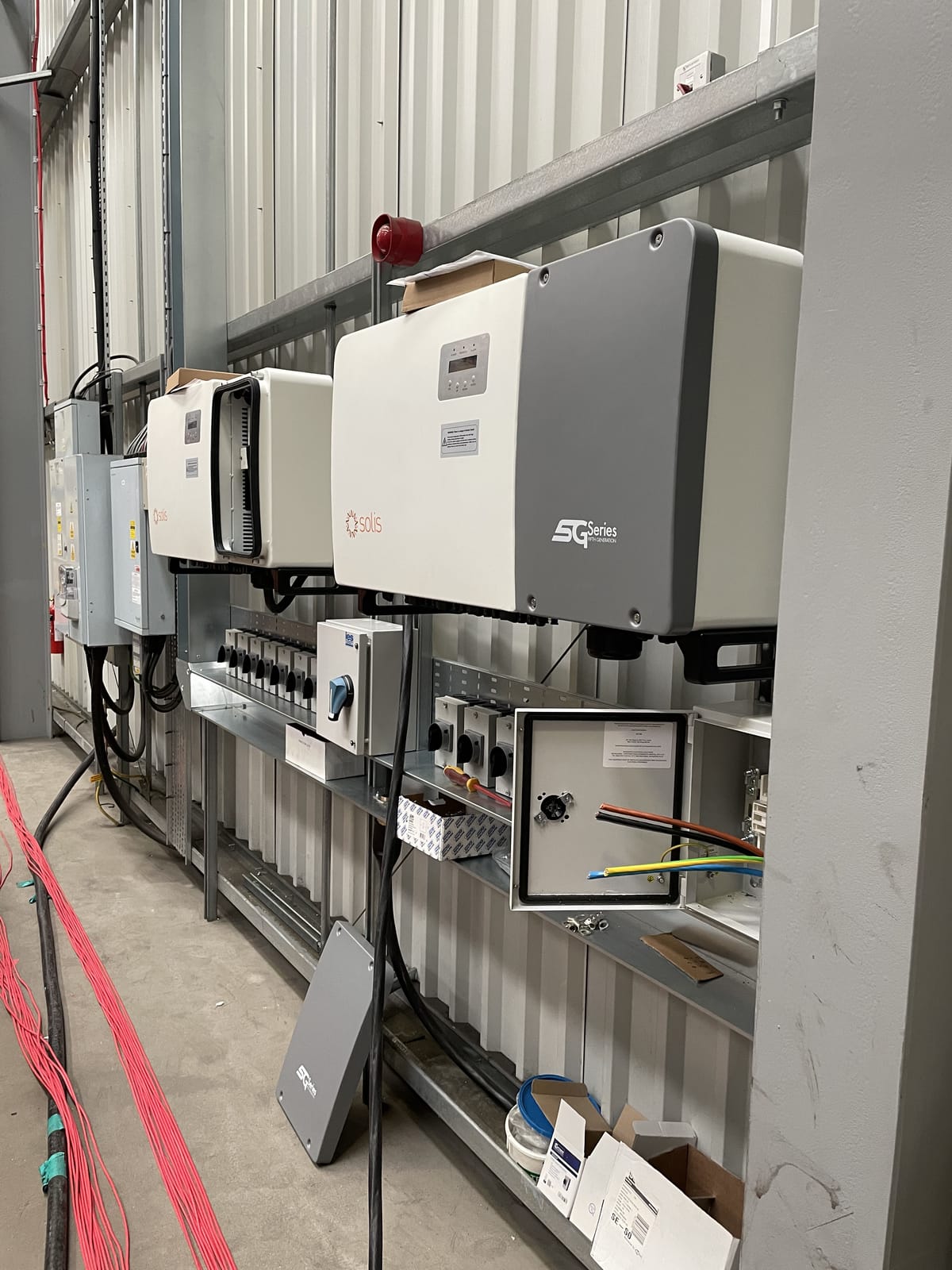
In-house, start to finish
We fit tier-1 monocrystalline panels in commercial formats — brand-agnostic on this page for now — with performance warranties commonly past 25 years. Inverters are Sigenergy and SMA, mid-market platforms chosen because a 25-year asset needs a manufacturer likely to still exist in year 15; plan to replace the inverter at 10–12 years. Batteries are Fox ESS, sized where storage earns its place — the full case is on the battery storage page.
Under all of it, solar PV is electrical contracting on a roof — the trade this firm has practised for more than 30 years. So if the distribution board needs upgrading before the array goes in, that is one phone call, not a second contractor.
On a pitched sheet roof, plan around 500–600 m² — roughly 5–6 m² per kWp once access routes and rooflights are worked around. Ballasted flat-roof arrays need more, typically 8–10 m² per kWp, because rows are spaced to stop them shading each other. A useful mental shortcut: if your building’s footprint is a quarter of an acre or more, a three-figure kWp system almost certainly fits.
Not onto it, no — we do not drill or fix into asbestos sheet under any circumstances. The workable routes are stripping and re-sheeting the roof first (often the right moment, since a new steel sheet roof and a solar array have similar working lives), using a different building on the site, or a ground-mounted array. It is a more expensive answer than the one some installers give. It is also the correct one.
Mostly, no. The roof work happens above your operations with the building live, and we plan deliveries and crane lifts around your site rather than through it. The one genuine interruption is the final connection and commissioning — a planned shutdown, usually measured in hours, scheduled for whenever hurts least, including weekends.
The on-roof work for a 100 kWp system is typically one to two weeks. The programme, though, is set by the G99 application and any consents — a realistic go-ahead-to-switch-on span is two to four months on an unconstrained network, longer where the network needs reinforcement or a listed building needs consent. We give you the honest programme at quote stage, because "we can start next week" is only ever true of the scaffolding.
Yes, but the landlord has to be in the room. On a short remaining lease the capital case rarely works for the tenant alone, and we will say so rather than sell around it. Owner-occupiers are the simple case; landlord-tenant sites need an agreement on who pays and who benefits, and we are happy to talk to both sides with the same numbers on the table.
Get a straight answer on your roof. Send us the building, the bill and the roof type — or put your own numbers through the commercial savings calculator first, no contact details needed.
Commercial solar, battery, EV or any electrical work — no pressure.