Store your own solar
A panel without storage sells its surplus for pence and buys it back at the full import rate hours later. A battery keeps that energy for when you actually need it.
Commercial · Agricultural · Homes
Quick answer
Battery storage in the North East, for homes and businesses:
Figures: Fox ESS datasheets and 2025 import-price data.
For your business
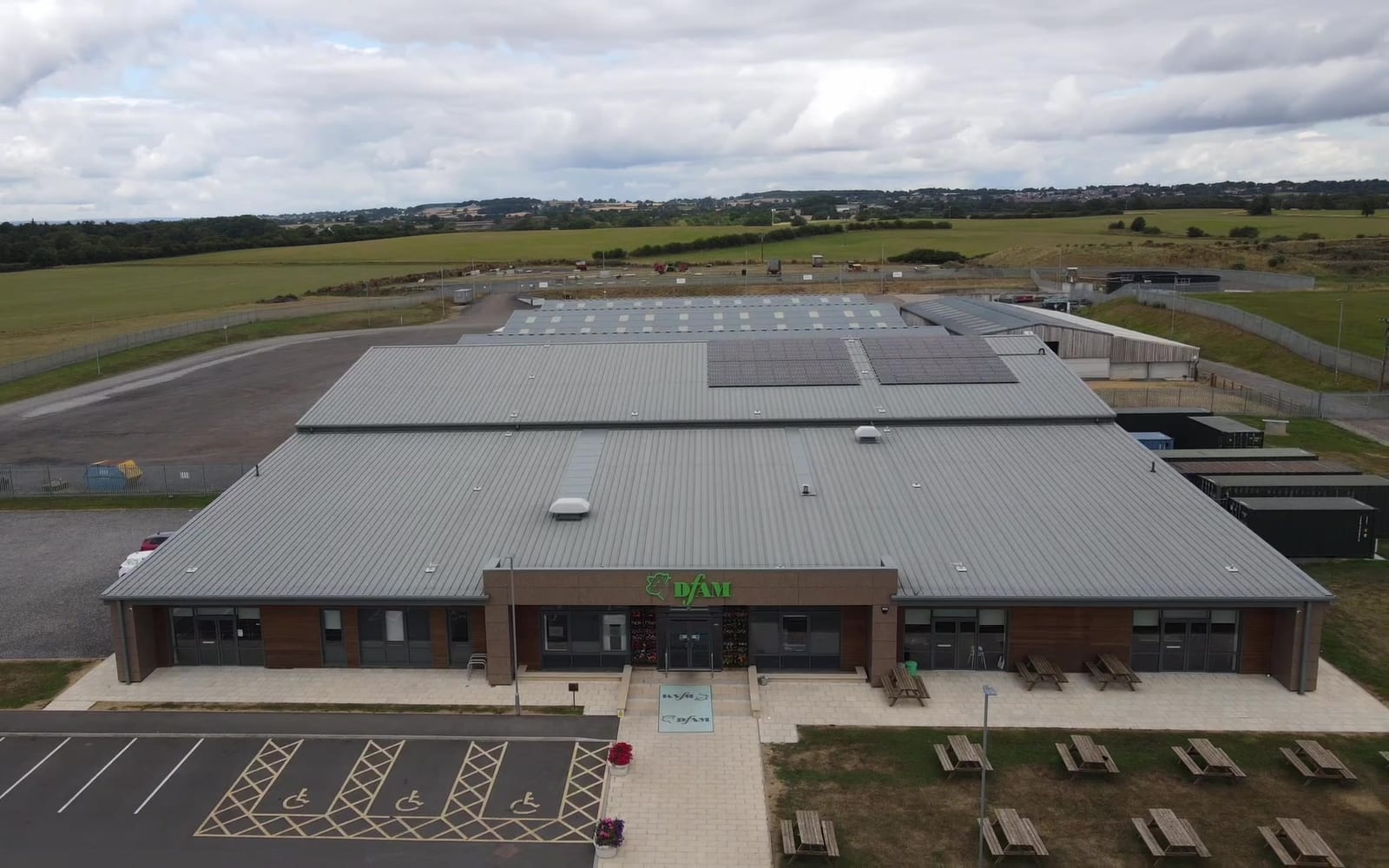
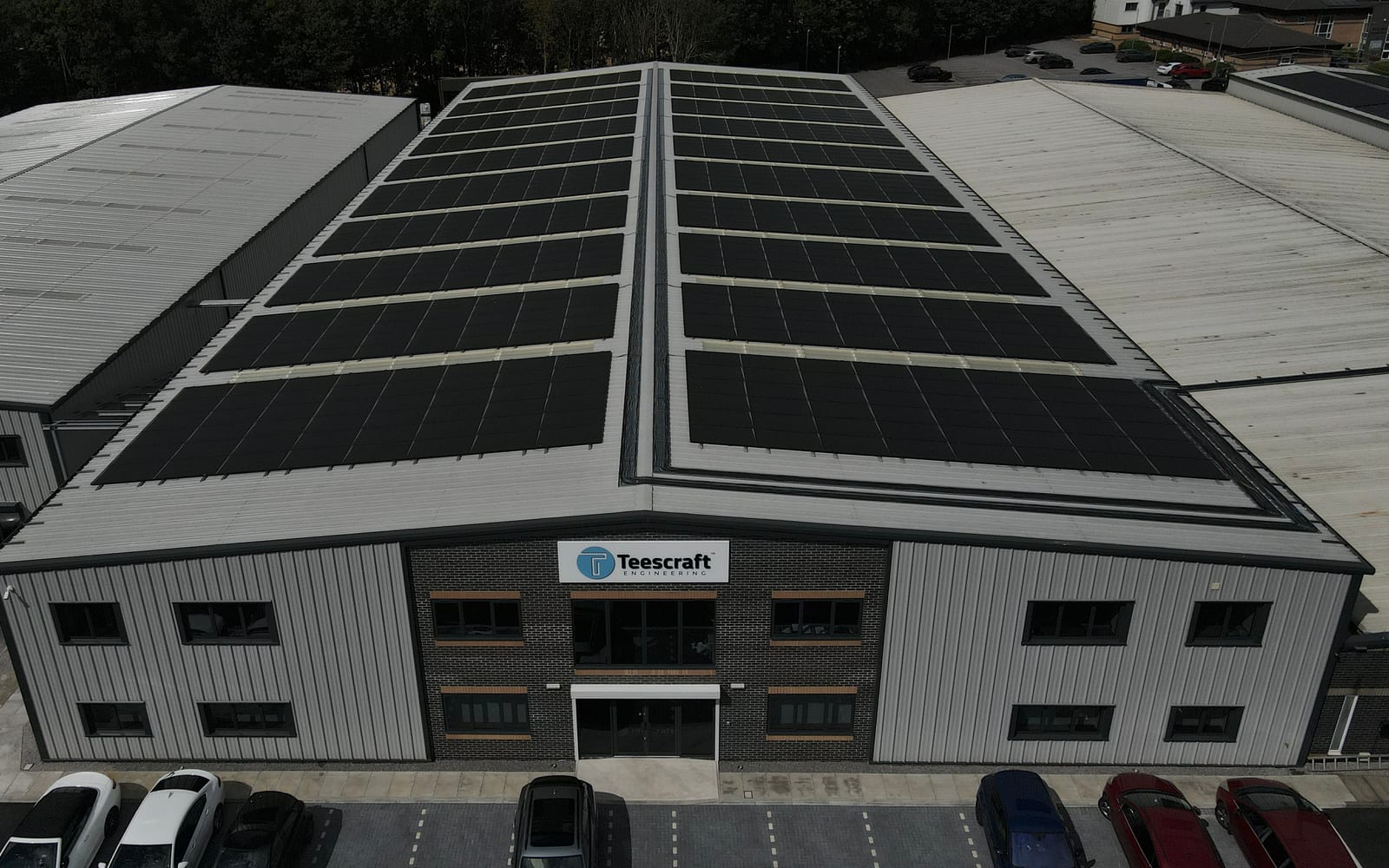
A battery earns its keep on a commercial site in three ways: it stores cheap or self-generated power for the expensive evening, it discharges through the priced grid peaks, and it can cap your peak demand so a growing site stays inside its agreed supply capacity. Manufacturing businesses averaged around 17–19p per kWh for imported electricity through 2025, while exported units typically earn a fraction of that.
It pays best where there is evening or overnight load — hospitality, cold storage, shift work, anywhere with refrigeration. A strict nine-to-five that already uses most of its generation has less to shift, and we will tell you that from your meter data before anything is priced. Capacity headroom is a problem our EV charging work runs into weekly.
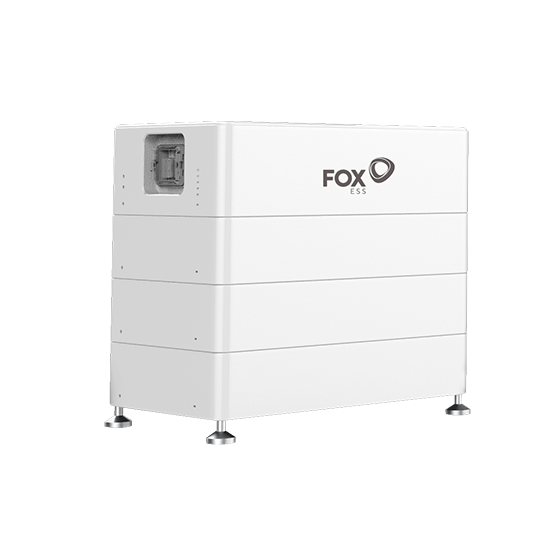 Manufacturer image · Fox ESS
 For your home
At home a battery does two of the same jobs it does for a business: it holds your daytime solar back for the evening, so you buy less from the grid after dark, and — if it is specified for it — it can keep essential circuits alive when the power goes off. Backup is a design choice, not a default: a standard system shuts down in a cut for safety, so tell us what genuinely must stay on and we size for that.
We fit Fox ESS at home too, sized from how your home actually uses electricity rather than a headline capacity, and the survey is free.
Three jobs
Storage costs real money and wears out faster than the panels, so it has to earn its place. Here is how it does — and we will say plainly when it does not.
A panel without storage sells its surplus for pence and buys it back at the full import rate hours later. A battery keeps that energy for when you actually need it.
Network charges are banded by time of day; the weekday late-afternoon “red band” is priced many times higher than overnight. A battery discharging through it cuts a line most businesses never itemise.
A standard grid-tied system shuts off in a power cut for safety. Specified for it, a battery isolates and holds a defined set of critical circuits — refrigeration, IT, security — for a defined time.
Our preferred platform
We install Fox ESS across the commercial range. The model-by-model detail — capacities and warranty terms — lives on our Fox ESS product page, where every figure is taken from the manufacturer’s own datasheets.
>89%
Round-trip efficiency
manufacturer-quoted
~6,000
Full charge cycles
LiFePO4 cells
10–12 yr
Planned working life
battery & inverter
3-phase
Hybrid up to T-MAX cabinets
scales by parallel connection
Practical, not romantic
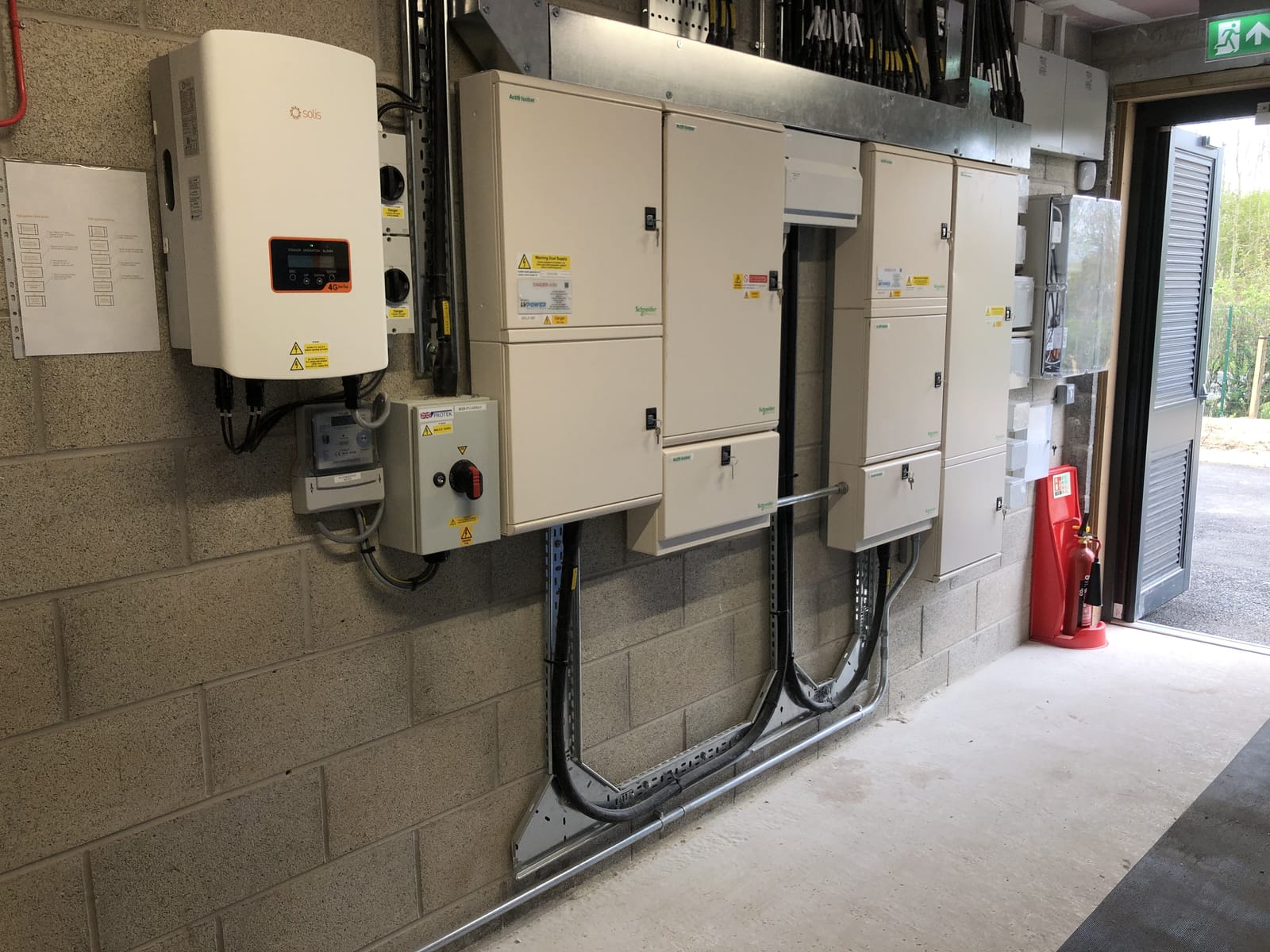
We install Fox ESS from three-phase hybrids with stackable battery towers on smaller commercial buildings up to the T-MAX line of all-in-one, liquid-cooled cabinet systems built for factories, logistics sites and EV charging hubs. The manufacturer quotes better than 89% round-trip efficiency — the number that decides how much of a stored unit you actually get back. Every figure lives on our Fox ESS product page, taken from the datasheets.
Chemistry and lifespan, stated straight: these are lithium iron phosphate systems, with cells commonly rated around six thousand full cycles — comfortably past a decade of daily work. Even so, we plan around a 10–12 year working life for any battery or inverter, and any payback case we show you has the eventual replacement in it. The panels above the battery will outlast it; anyone telling you otherwise about the battery is overselling.
Not a brochure
Battery sizing has two numbers, and conflating them is the commonest specification mistake we see. A peak-shaving battery needs power; an overnight load-shifter needs energy; a backup system needs both, but only for the circuits that matter.
We would rather fit the smaller system that cycles hard every day than the impressive one that sits half-idle. An oversized battery is not a safety margin; it is capital doing nothing.
What changes
The same site, the same solar — this is what storage changes about where your energy goes, hour by hour.
| Without a battery | With a battery | |
|---|---|---|
| Daytime solar surplus | Exported for pence | Stored, used at the evening import rate |
| Evening & overnight demand | Bought at the full import rate | Covered from stored energy |
| Peak “red-band” charges | Paid in full | Discharged through the peak |
| Power cut | System shuts off (anti-islanding) | Essential circuits held up, if specified |
| Site capacity headroom | Limited by your agreed supply | Peak demand capped |
The contractor behind the cabinet
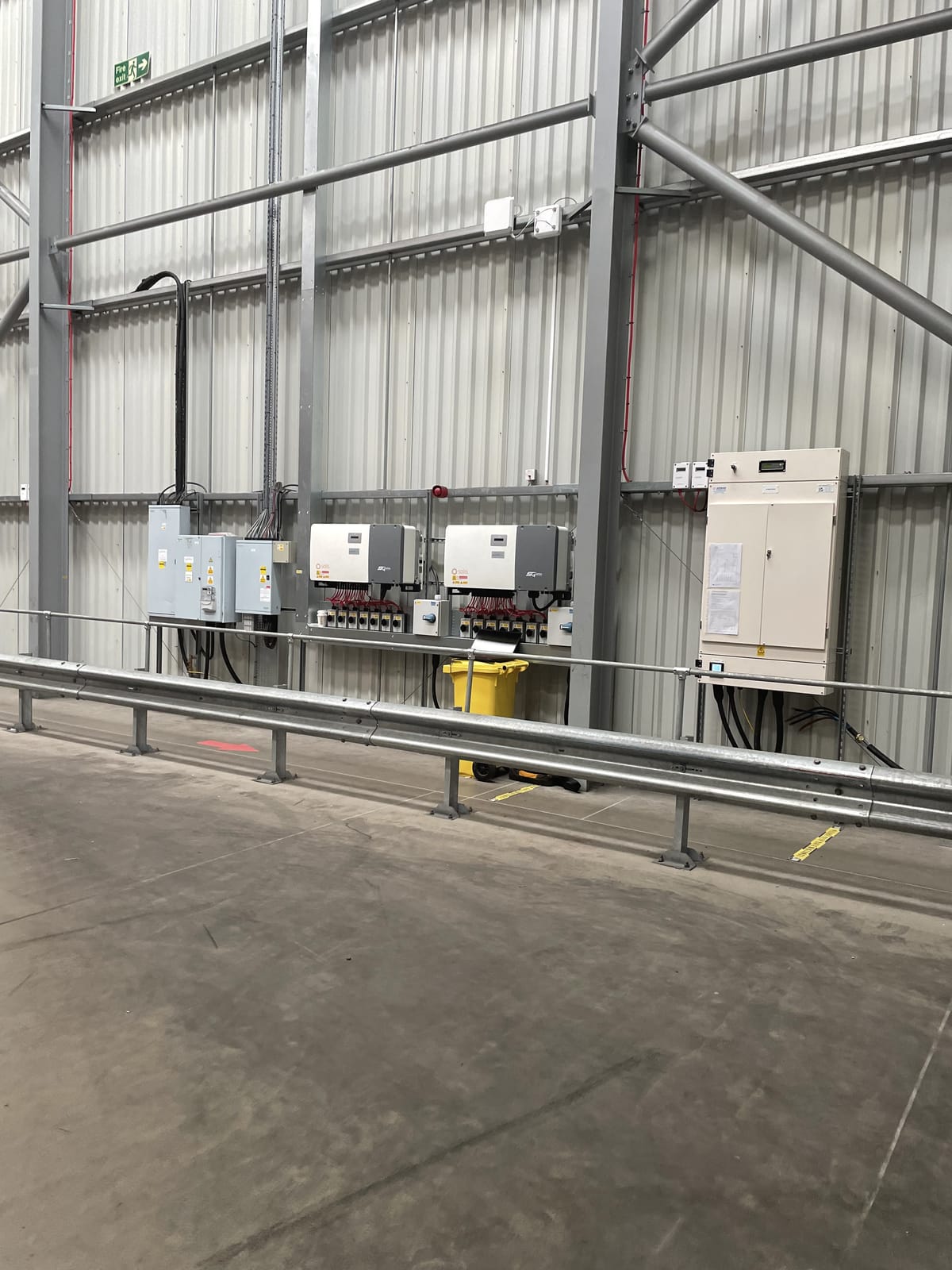
A battery that is specified for backup isolates from the grid and carries a defined set of critical circuits — refrigeration, IT, security, a milking parlour — for a defined time. What it is not, unless deliberately engineered that way, is a whole-site uninterruptible supply; that is a different design conversation, and one this firm can actually have, because generator and UPS backup has been part of our electrical work for decades.
On the paperwork: an export-capable battery goes through the same G99 application as a solar array, handled the same way — submitted early, agreed before commissioning. If you are adding storage to an existing solar system, the original connection agreement usually needs revisiting; bring it to the survey and we will tell you on the spot. On tax, battery storage has no single statutory answer — put it in front of your accountant, and we will supply the figures and the specification they ask for.
Only if it was designed to — a standard grid-tied system disconnects in an outage by law, so backup has to be specified, not assumed. A backup-capable design isolates from the grid and carries your chosen critical circuits for a defined period. Decide what genuinely cannot stop — refrigeration, servers, livestock systems — and we will design and quote around that list.
The honest answer is a shape, not a number: it comes from your metered usage profile, your tariff’s time bands and what you want the battery to do. As a sighting shot, load-shifting batteries usually land somewhere between the size of your typical evening consumption and your solar surplus — but we have seen the data change that answer by a factor of two in both directions, which is exactly why we start with the data.
Yes — storage is named alongside generation in the exemption, so a battery serving your onsite solar is exempt until 31 March 2035, applied automatically at valuation. A battery with no onsite generation attached is the grey area; ask us and we will give you a straight read on your configuration.
Plan on 10–12 years, and treat anything labelled "lifetime" with suspicion. Cell ratings in the several-thousand-cycle class support a decade-plus of daily cycling, but a battery is working electronics, not roof steel — it will need replacing while the panels above it carry on. Our payback modelling includes that replacement; make sure any competing quote does the same.
The next step is data, not a deposit. Send us a recent bill and, if you have it, your consumption data — we will tell you whether storage earns its place on your site, and show the working either way. And if the answer today is that it does not, you will hear that too, with the numbers that would need to change before it did.
Commercial solar, battery, EV or any electrical work — no pressure.